
Reading is cool again? Raves to Flybraries, new ways we're falling for books

From a book in your bag to a book rave in a nightclub, to free books at Indian airports, reading culture is getting a "cool" makeover. Here's a look at the communities, viral trends and initiatives making reading desirable.
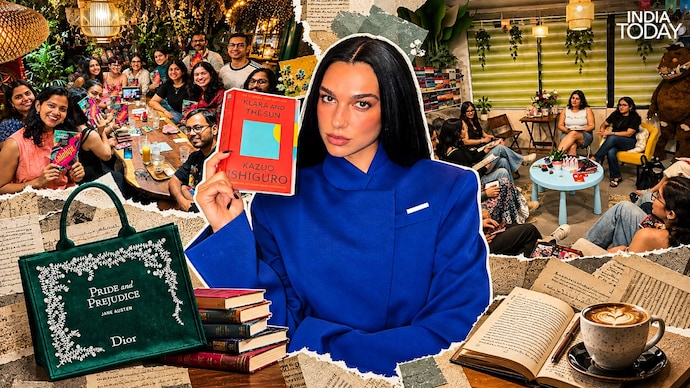
Viral concepts are propping up around reading and how (Photo: Getty, Shivani Kaul, Dua Lipa/Instagram; Stylised by Vikram)
New Delhi,Oct 5, 2026 09:06 IST Last UpdatedOct 5, 2026 09:06 IST
  Published by
Last UpdatedOct 5, 2026 09:06 IST Published byJigyasa Sahay
Oct 5, 2026 09:02 IST“If you are going to get anywhere in life, you have to read a lot of books.” - Roald Dahl
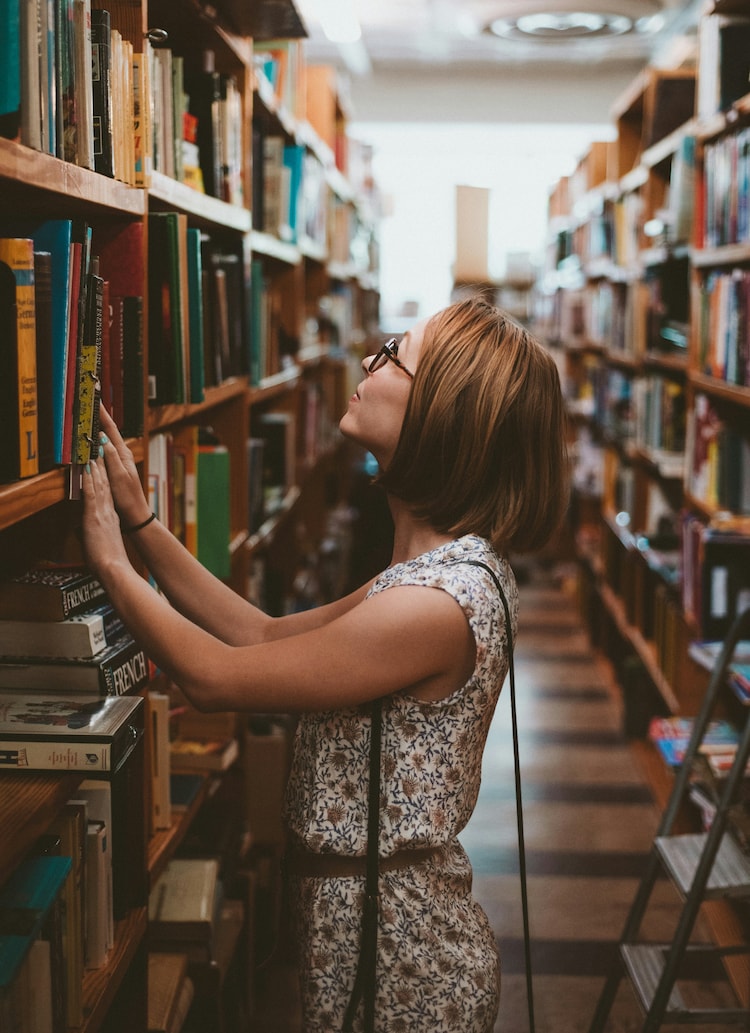
In the doomscolling times, it seemed like reading books was losing its place with attention spans are shrinking and patience is wearing thin. If anything, books belonged to quiet corners, long commutes and people with the patience to sit still for hundreds of pages. Picture a reader tucked away in a silent corner of a library, a geeky nerd with their nose buried in a book in the comfort of their room, or a quiet passenger turning pages as the metro rattles along.
But reading is stepping out of those stereotypical shadows. The book hasn't changed. Where, when and with whom we read it, has.
Beyond the traditional book-club sense, people are now coming together to read at nightclubs, rooftop cafes and more and calling it "reading raves". That's the Gen Z kind of spin to make sitting with a book feel more social, more fun and aesthetic, and, dare we say, cool.
It is becoming social, visible and culturally desirable, bringing new readers along with it. And this new reading culture speaks of such raves, rise in silent reading clubs, celeb-approved reading lists, literary fashion and even government-backed initiatives.
So, dear gentle reader, let’s turn the page and see what reading looks like now.
The trends making reading 'cool'
There are some literary trends that are more community-oriented and tap into the idea of socialising. Then there are others that simply encourage the so-called lost art of reading books.
The reading raves culture
Recently, Japan's ‘Jucy Book Rave’ went crazy viral. It took place at an underground club in Tokyo. Several people came together with their books, sat beside lamps, reading their own author. A DJ played some ambient music, and socialising was optional.
In Amsterdam, a similar event took place at the rooftop cafe of a science museum. Then there are several silent reading clubs where people simply come together and read their own books, like Lodhi Reads. In Melbourne, there’s a community called “Book Doof” that organises silent reading raves, book swaps and more.
According to Kartik Chauhan, an editor at a publishing house and reader based in Delhi, it can all be attributed to an “urban epidemic of loneliness”.
“I think we are severely deprived of that sense of community because there’s also increasing reliance on AI, capitalism, consumerism, so a lot of these things have made it very difficult for people to interact with each other.”
“I really like discovering how reading can seamlessly intersect with other cultural activities, and I feel that in the attention economy we live in, it has become imperative to incentivise the experience of the reader. When combined with a community-building exercise, it generates a lot of excitement for existing readers and helps find new ones,” Shivani Kaul, book publicist and curator of Babelfish Book Club, told India Today.
Chauhan has seen this first-hand at book clubs and literary events, where people say they are finding friends and a sense of community at a time when “everything is becoming very, very ghettoised now.”
To be honest, it is part of a larger appetite for the analogue life.
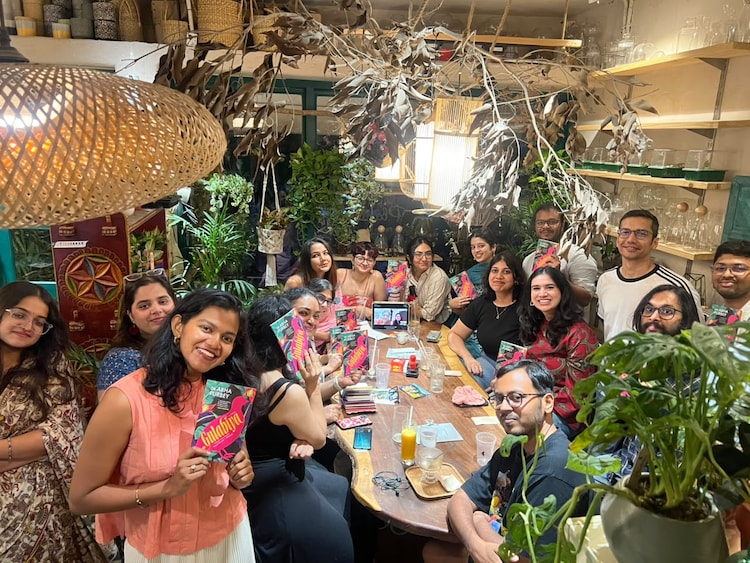
Aashna Malhotra, a bookseller, says, “I think reading anywhere, in any form, is a good thing. It’s no longer just about reading alone; it’s also about sharing the experience of reading. There’s something beautiful about seeing a young reader discover an age-old classic for the first time, and then connect with a stranger over a shared love (or dislike) of a book.”
The pages may be paper, but the conversation around them has gone very digital.
For the love of books
BookTok and Bookstagram have long been the social-media corners of the reading community, where bibliophiles share recommendations, reviews, quotes and TBR lists.
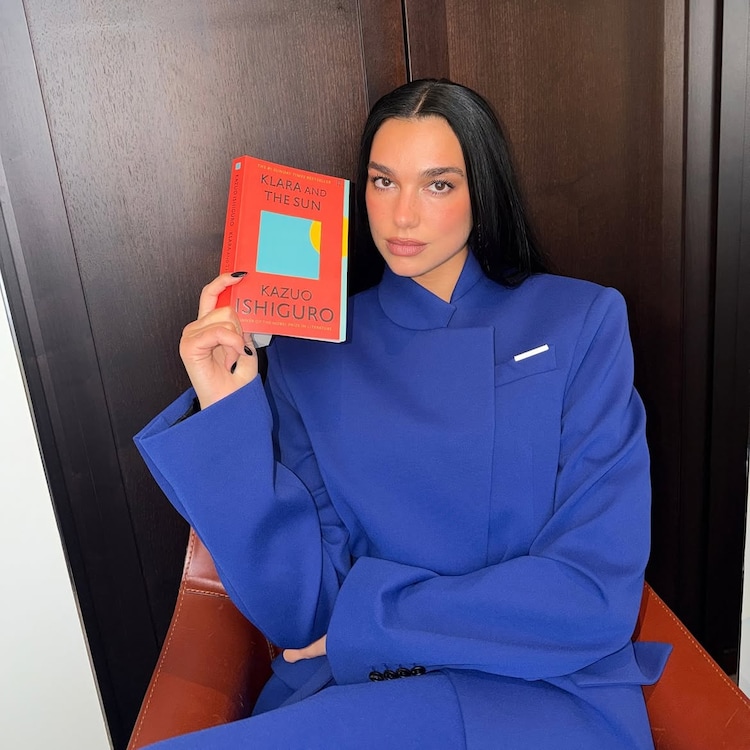
But when your fav celeb picks up a book, the humble read gets a whole new kind of cool. Celebrity endorsements have always had a way of making things feel instantly cooler, viral and aspirational. The latest name hot off the press? Dua Lipa.
She recently married actor Callum Turner. The two reportedly bonded after coincidentally finding each other reading the same book. And with that, Lipa’s Training Season was truly over too. So, much for the love of books! (IYKYK).
She even has her own Service95 Book Club, where she drops in her recommendations.
BTW, did you know that even fashion is giving another reason to return to classics
The literature-fication of fashion
Virginia Woolf once said, “Books are the mirrors of the soul.” Coach took that idea a step further, turning what you read into something you can wear. At Coach’s show during New York Fashion Week 2026, Elle Fanning and other celebrities were spotted with tiny book charms on their bags (Labubu who?).
Its collaboration with Penguin Random House features readable miniature book charms. And Coach isn’t alone. Dior, too, has embraced literary aesthetics with totes inspired by classic books.
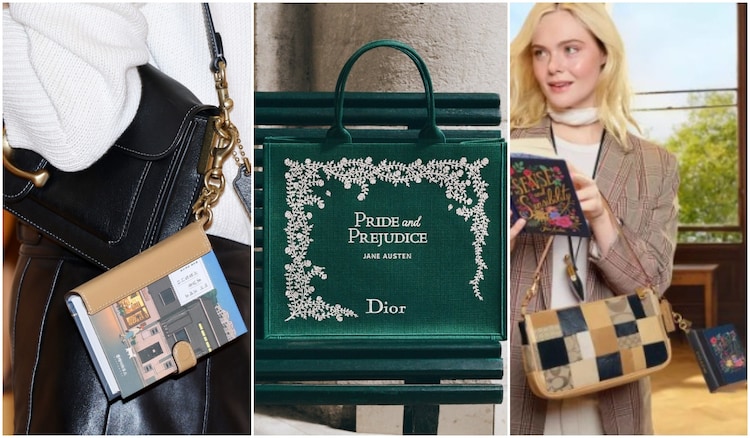
Meanwhile, book lovers online are turning their reads into mini handbags, using bookmark straps that slip between the pages and double as tiny purse handles.
But this reading revival doesn’t stop at the wardrobe; across the world, initiatives are finding creative ways to bring people back to books. Remember the Books on Delhi Metro trend?
There's more happening now.
Getting people to pick up a book more
India is making books easier to stumble upon too. Flybrary lets travellers pick up free books at participating airports, read them during their journey and return them to their destination. Singapore has taken a more gamified route, rewarding people with virtual coins for reading for at least 15 minutes a day.
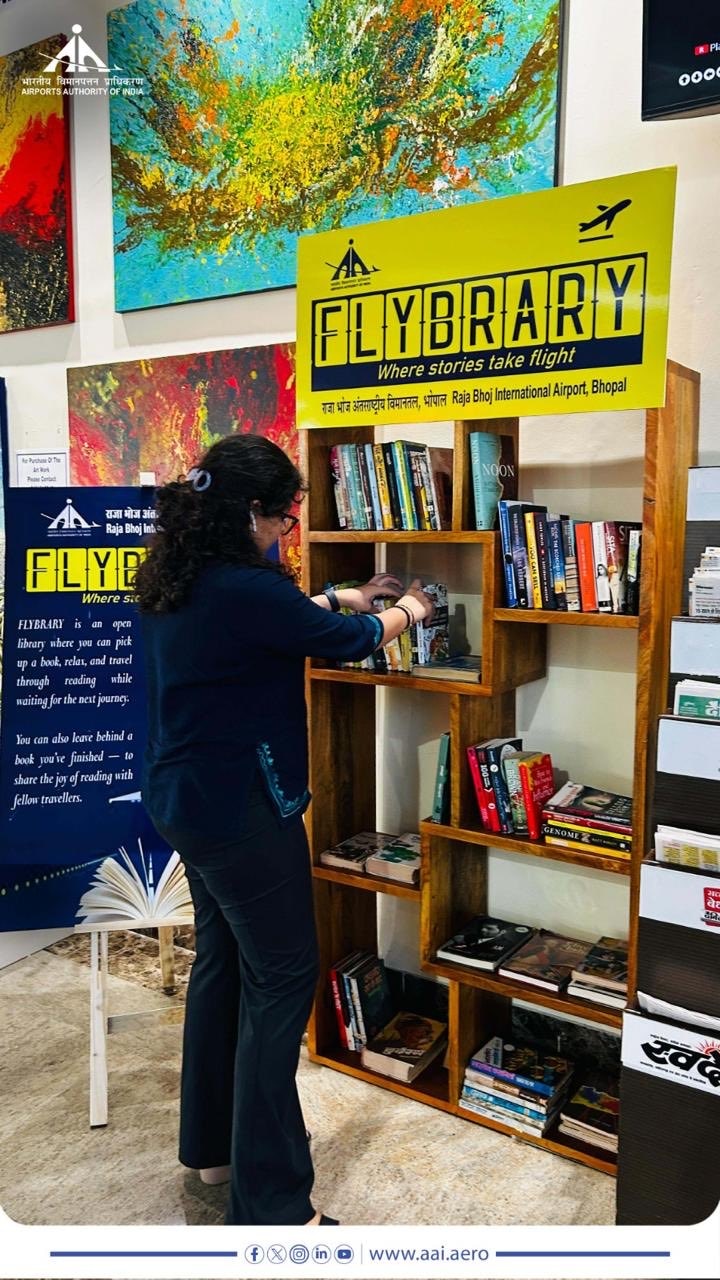
And these are just a handful of the several initiatives that are coming up to encourage reading and make books more accessible.
And one of the signs that something is actually shifting is not just on Instagram, but inside bookstores. Abhinav Bamhi, fourth-generation bookseller at Faqir Chand and Sons bookstore, shares his side of the observation.
Rise of a new generation of readers
“There is an increase in younger readers coming to the shop, particularly those between 15 and 35. This age group was not this heavy a buyer earlier, but there is a lot of cultural influence from what they consume online. A lot of readers are also first-generation readers. I feel like I'm privileged with the power of influencing people's mind. I recommend them the first book of their lives, and that can shape their habit of reading in future. There is also a huge increase in demand for Hindi and Urdu titles, with people discovering authors through shayari reels and social media. So overall, it is a positive change.”
Even Chauhan thinks that reading is making a comeback in a very big way, and much of it has to do with this kind of AI slop that we are being fed. Where’s the lie?
But there is a flip side. Social media can introduce people to books, but it can also tell them what they should read, and Bamhi highlights when it gets counterintuitive.
“A few months ago, White Nights by Dostoyevsky was trending, and many people were buying it without even knowing who the author is. Kids who are 15 or 16 sometimes ask for Dostoyevsky or Sylvia Plath, and I have to warn them that these are not easy books. That is one thing that bothers me a little—people are being recommended these books without a warning of how much psychological impact these authors can have, given the depth they carry.”
Malhotra sees both sides of the shift. “This pace of discovery can be a little overwhelming; the hype around a book can build incredibly quickly and disappear just as fast as readers move on to the next ‘must-read.’ But there’s a lot to be excited about too. Readers have more choices than ever, and more authors are being discovered.”
So, is reading cool again?
For Kaul and Malhotra, “reading was never uncool”. For people who grew up surrounded by books, maybe it never was. But for a first-generation reader, a viral reel, a celebrity recommendation or a reading rave might be the thing that gets them through the door.
According to Bamhi, “A lot of readers I meet at the shop are first-generation readers in their family. So I think, to encourage them, it is important for reading to be cool because, otherwise, why would they pick up a book? They weren't initiated by their parents or raised in a setup that revolves around reading culture. So, for somebody getting initiated into reading, I think it's fair for it to be cool.”
And maybe that's not such a bad way to begin a lifelong relationship with books.
- Ends

Travel-Colours-Quirks are things Jigyasa associates with. She is someone who enjoys the world of stories and believes that one travels through narratives they write and share. Her mantra for life is -"Hakuna Matata." Currently, she covers lifestyle and everything and anything that falls under the umbrella.
READ MORE