Who is Vimala Bathineni? Andhra scientist wins Danish fellowship worth Rs 3.6 crore
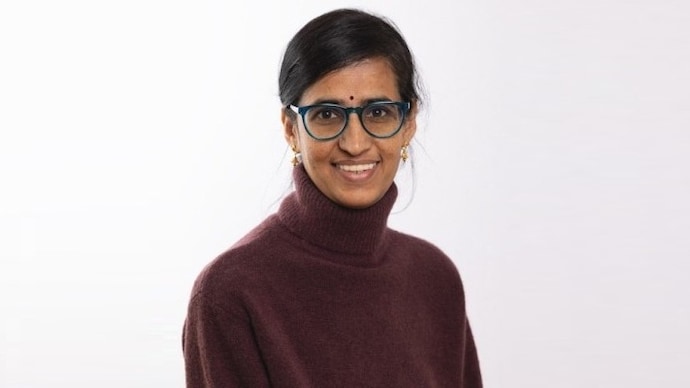
After years of rejection and uncertainty, Andhra Pradesh scientist Vimala Bathineni has secured a prestigious Danish PhD fellowship worth around Rs 3.6 crore. Her research will explore whether Denmark can replace imported soy with locally grown faba beans, helping build a more sustainable and climate-resilient agricultural system.
For years, every PhD application brought another rejection.
Instead of giving up, Andhra Pradesh scientist Vimala Bathineni kept applying, refining her ideas and trying again. That persistence has now earned her one of Denmark's prestigious DARA PhD Fellowships, worth about 2.5 million Danish kroner (around Rs 3.6 crore). The fellowship supports doctoral research at Danish universities on projects aligned with Denmark's research and innovation priorities.
She will begin her three-year doctoral programme at the University of Southern Denmark in September 2026.
YEARS OF REJECTION, ONE BREAKTHROUGH
Sharing the news on LinkedIn, Bathineni described the fellowship as much more than an academic achievement.
"After many PhD applications, countless rejections, and years of uncertainty, I am genuinely grateful to share that I have been awarded the DARA PhD Fellowship," she wrote.
She revealed that this was not her first attempt.
"There were moments when I genuinely doubted myself, including multiple PhD rejections and my first unsuccessful attempt at the DARA application. But each rejection taught me something."
FROM ANDHRA TO DENMARK
Bathineni previously worked as a scientist at the Horticulture Research Station in Rekulakunta, Andhra Pradesh, between 2019 and 2023. She later moved to Denmark after her husband took up a job there, stepping away from a stable career in India to pursue research.
Her doctoral project, FABA LOOP, will examine whether Denmark can reduce its dependence on imported soy protein by expanding the cultivation of protein-rich faba beans under real farming and climate conditions. The project will assess where the crop can be grown, how much soy it could replace, and its environmental benefits.
The findings could help improve Denmark's protein self-sufficiency while supporting climate-friendly agriculture and more sustainable food systems.
'IT FEELS LIKE A NATURAL CONTINUATION'
Bathineni said the project reflects work she has been building towards for years.
"It feels like a natural continuation of a direction I have been building over the past decade," she wrote, adding that the fellowship gives her the freedom to shape research around ideas she has long wanted to pursue.
For many aspiring researchers, her story is also a reminder that rejection may delay a dream, but it does not have to end it.
For years, every PhD application brought another rejection.
Instead of giving up, Andhra Pradesh scientist Vimala Bathineni kept applying, refining her ideas and trying again. That persistence has now earned her one of Denmark's prestigious DARA PhD Fellowships, worth about 2.5 million Danish kroner (around Rs 3.6 crore). The fellowship supports doctoral research at Danish universities on projects aligned with Denmark's research and innovation priorities.
She will begin her three-year doctoral programme at the University of Southern Denmark in September 2026.
YEARS OF REJECTION, ONE BREAKTHROUGH
Sharing the news on LinkedIn, Bathineni described the fellowship as much more than an academic achievement.
"After many PhD applications, countless rejections, and years of uncertainty, I am genuinely grateful to share that I have been awarded the DARA PhD Fellowship," she wrote.
She revealed that this was not her first attempt.
"There were moments when I genuinely doubted myself, including multiple PhD rejections and my first unsuccessful attempt at the DARA application. But each rejection taught me something."
FROM ANDHRA TO DENMARK
Bathineni previously worked as a scientist at the Horticulture Research Station in Rekulakunta, Andhra Pradesh, between 2019 and 2023. She later moved to Denmark after her husband took up a job there, stepping away from a stable career in India to pursue research.
Her doctoral project, FABA LOOP, will examine whether Denmark can reduce its dependence on imported soy protein by expanding the cultivation of protein-rich faba beans under real farming and climate conditions. The project will assess where the crop can be grown, how much soy it could replace, and its environmental benefits.
The findings could help improve Denmark's protein self-sufficiency while supporting climate-friendly agriculture and more sustainable food systems.
'IT FEELS LIKE A NATURAL CONTINUATION'
Bathineni said the project reflects work she has been building towards for years.
"It feels like a natural continuation of a direction I have been building over the past decade," she wrote, adding that the fellowship gives her the freedom to shape research around ideas she has long wanted to pursue.
For many aspiring researchers, her story is also a reminder that rejection may delay a dream, but it does not have to end it.
For years, every PhD application brought another rejection.
Instead of giving up, Andhra Pradesh scientist Vimala Bathineni kept applying, refining her ideas and trying again. That persistence has now earned her one of Denmark's prestigious DARA PhD Fellowships, worth about 2.5 million Danish kroner (around Rs 3.6 crore). The fellowship supports doctoral research at Danish universities on projects aligned with Denmark's research and innovation priorities.
She will begin her three-year doctoral programme at the University of Southern Denmark in September 2026.
YEARS OF REJECTION, ONE BREAKTHROUGH
Sharing the news on LinkedIn, Bathineni described the fellowship as much more than an academic achievement.
"After many PhD applications, countless rejections, and years of uncertainty, I am genuinely grateful to share that I have been awarded the DARA PhD Fellowship," she wrote.
She revealed that this was not her first attempt.
"There were moments when I genuinely doubted myself, including multiple PhD rejections and my first unsuccessful attempt at the DARA application. But each rejection taught me something."
FROM ANDHRA TO DENMARK
Bathineni previously worked as a scientist at the Horticulture Research Station in Rekulakunta, Andhra Pradesh, between 2019 and 2023. She later moved to Denmark after her husband took up a job there, stepping away from a stable career in India to pursue research.
Her doctoral project, FABA LOOP, will examine whether Denmark can reduce its dependence on imported soy protein by expanding the cultivation of protein-rich faba beans under real farming and climate conditions. The project will assess where the crop can be grown, how much soy it could replace, and its environmental benefits.
The findings could help improve Denmark's protein self-sufficiency while supporting climate-friendly agriculture and more sustainable food systems.
'IT FEELS LIKE A NATURAL CONTINUATION'
Bathineni said the project reflects work she has been building towards for years.
"It feels like a natural continuation of a direction I have been building over the past decade," she wrote, adding that the fellowship gives her the freedom to shape research around ideas she has long wanted to pursue.
For many aspiring researchers, her story is also a reminder that rejection may delay a dream, but it does not have to end it.

