Why Harvard's official website feels like an elite bookstore this summer
Harvard's official website has turned into a book lover's haven this summer, featuring 27 reading recommendations across fiction, fantasy and non-fiction, offering a refreshing reminder that curiosity and learning extend beyond classrooms.
Harvard University is a name that echoes across the world whenever students think about studying abroad. Ranked among the top universities globally, Harvard continues to attract millions of aspiring students every year. According to the QS World University Rankings 2027, the university is ranked fifth in the world, maintaining its position among the global academic elite.
But recently, a visit to Harvard’s official website offered a rather unexpected experience. Instead of being greeted by admission updates, research highlights or campus news, visitors were welcomed with something far more familiar to book lovers: a carefully curated list of book recommendations.
At first glance, Harvard’s homepage looked less like the website of one of the world’s most prestigious universities and more like an elegant online bookstore.
The experience felt refreshing. In a digital world dominated by rankings, applications, and achievements, the official website of one of the world’s most famous universities was simply celebrating the joy of reading. Harvard’s homepage highlighted books, authors, and recommendations from its community.
A HOMEPAGE DEDICATED TO BOOKS, AUTHORS AND SUMMER READING
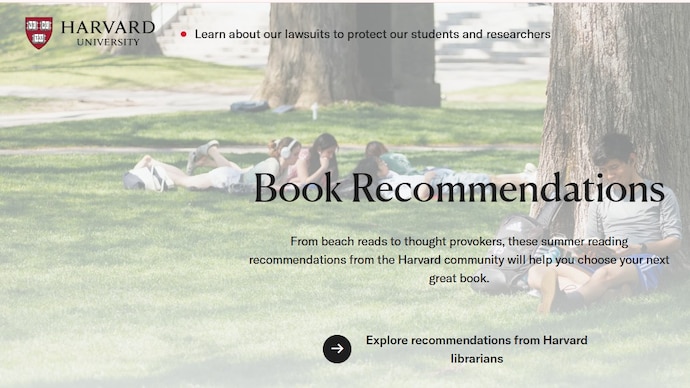
As visitors open Harvard’s website, they are greeted with the headline: “Book Recommendations: From beach reads to thought-provokers, these summer reading recommendations from the Harvard community will help you choose your next great book.”
Scrolling further, the website continues its literary journey.
One section highlights books recommended by members of the Harvard community that “expand the notion of what literature can be”. Another explores mystery novels, noting how detective stories remain popular choices among readers looking for engaging summer reads.
The homepage also features sections focusing on finance and other topics, but books remain at the centre of the experience.
For someone who enjoys reading, the website feels like an invitation to explore: almost like walking into a carefully designed bookstore where every shelf has a story waiting to be discovered.
So, why does Harvard’s official website look like a bookstore this summer?
One possible reason is the academic calendar. Harvard’s regular undergraduate classes are currently on summer break. While the campus remains active through programmes such as Harvard Summer School, which continues sessions through August 2026, the regular academic calendar places the end of the spring term in May and the beginning of the fall term in September.
With students away for the summer and the new academic year yet to begin, the university appears to be using this period to highlight something that has long been central to academic life: reading and ideas.
THE 27 BOOKS HARVARD RECOMMENDS FOR SUMMER READING
Harvard’s summer reading recommendations cover a wide range of genres, from fiction and science fiction to fantasy and non-fiction.
Fiction
- Straight Man by Richard Russo
- Transcription by Ben Lerner
- The Extinction of Irena Rey by Jennifer Croft
- More Weight: A Salem Story by Ben Wickey
- Barkskins by Annie Proulx
- The Summer Book by Tove Jansson
- Strange Houses by Uketsu, translated by Jim Rion
- Playground by Richard Powers
- Hamnet by Maggie O’Farrell
- The Stranger’s Child by Alan Hollinghurst
Science fiction and fantasy
- All Systems Red by Martha Wells
- The Final System by Anthony Tardiff
- Player Piano by Kurt Vonnegut
- Yokohama Kaidashi Kikou by Hitoshi Ashinano
- Bitter Medicine by Mia Tsai
- The Everlasting by Alix E. Harrow
- Audition for the Fox by Martin Cahill
- I, Medusa by Ayana Gray
- The Tapestry of Fate by Shannon Chakraborty
Non-fiction
- Waiting on the Moon: Artists, Poets, Drifters, Grifters, and Goddesses by Peter Wolf
- Elvis Is Dead, I’m Still Alive: The Story of Asian Man Records by Mike Huguenor
- No New York by Adele Bertei
- This Is Not a Book About Benedict Cumberbatch: The Joy of Loving Something — Anything — Like Your Life Depends On It by Tabitha Carvan
- Of Thorn & Briar: A Year with the West Country Hedgelayer by Paul Lamb
- I Hear Freedom: The Great Migration, Free Jazz, and Black Power by Cisco Bradley
- Silicon Snake Oil: Second Thoughts on the Information Highway by Clifford Stoll
- How to Winter: Harness Your Mindset to Thrive on Cold, Dark, or Difficult Days by Kari Leibowitz
For a university known for producing world leaders, researchers and innovators, Harvard’s summer homepage offers a quieter message — that curiosity does not always begin in classrooms or laboratories. Sometimes, it begins with a good book.
Harvard University is a name that echoes across the world whenever students think about studying abroad. Ranked among the top universities globally, Harvard continues to attract millions of aspiring students every year. According to the QS World University Rankings 2027, the university is ranked fifth in the world, maintaining its position among the global academic elite.
But recently, a visit to Harvard’s official website offered a rather unexpected experience. Instead of being greeted by admission updates, research highlights or campus news, visitors were welcomed with something far more familiar to book lovers: a carefully curated list of book recommendations.
At first glance, Harvard’s homepage looked less like the website of one of the world’s most prestigious universities and more like an elegant online bookstore.
The experience felt refreshing. In a digital world dominated by rankings, applications, and achievements, the official website of one of the world’s most famous universities was simply celebrating the joy of reading. Harvard’s homepage highlighted books, authors, and recommendations from its community.
A HOMEPAGE DEDICATED TO BOOKS, AUTHORS AND SUMMER READING
As visitors open Harvard’s website, they are greeted with the headline: “Book Recommendations: From beach reads to thought-provokers, these summer reading recommendations from the Harvard community will help you choose your next great book.”
Scrolling further, the website continues its literary journey.
One section highlights books recommended by members of the Harvard community that “expand the notion of what literature can be”. Another explores mystery novels, noting how detective stories remain popular choices among readers looking for engaging summer reads.
The homepage also features sections focusing on finance and other topics, but books remain at the centre of the experience.
For someone who enjoys reading, the website feels like an invitation to explore: almost like walking into a carefully designed bookstore where every shelf has a story waiting to be discovered.
So, why does Harvard’s official website look like a bookstore this summer?
One possible reason is the academic calendar. Harvard’s regular undergraduate classes are currently on summer break. While the campus remains active through programmes such as Harvard Summer School, which continues sessions through August 2026, the regular academic calendar places the end of the spring term in May and the beginning of the fall term in September.
With students away for the summer and the new academic year yet to begin, the university appears to be using this period to highlight something that has long been central to academic life: reading and ideas.
THE 27 BOOKS HARVARD RECOMMENDS FOR SUMMER READING
Harvard’s summer reading recommendations cover a wide range of genres, from fiction and science fiction to fantasy and non-fiction.
Fiction
- Straight Man by Richard Russo
- Transcription by Ben Lerner
- The Extinction of Irena Rey by Jennifer Croft
- More Weight: A Salem Story by Ben Wickey
- Barkskins by Annie Proulx
- The Summer Book by Tove Jansson
- Strange Houses by Uketsu, translated by Jim Rion
- Playground by Richard Powers
- Hamnet by Maggie O’Farrell
- The Stranger’s Child by Alan Hollinghurst
Science fiction and fantasy
- All Systems Red by Martha Wells
- The Final System by Anthony Tardiff
- Player Piano by Kurt Vonnegut
- Yokohama Kaidashi Kikou by Hitoshi Ashinano
- Bitter Medicine by Mia Tsai
- The Everlasting by Alix E. Harrow
- Audition for the Fox by Martin Cahill
- I, Medusa by Ayana Gray
- The Tapestry of Fate by Shannon Chakraborty
Non-fiction
- Waiting on the Moon: Artists, Poets, Drifters, Grifters, and Goddesses by Peter Wolf
- Elvis Is Dead, I’m Still Alive: The Story of Asian Man Records by Mike Huguenor
- No New York by Adele Bertei
- This Is Not a Book About Benedict Cumberbatch: The Joy of Loving Something — Anything — Like Your Life Depends On It by Tabitha Carvan
- Of Thorn & Briar: A Year with the West Country Hedgelayer by Paul Lamb
- I Hear Freedom: The Great Migration, Free Jazz, and Black Power by Cisco Bradley
- Silicon Snake Oil: Second Thoughts on the Information Highway by Clifford Stoll
- How to Winter: Harness Your Mindset to Thrive on Cold, Dark, or Difficult Days by Kari Leibowitz
For a university known for producing world leaders, researchers and innovators, Harvard’s summer homepage offers a quieter message — that curiosity does not always begin in classrooms or laboratories. Sometimes, it begins with a good book.
Harvard University is a name that echoes across the world whenever students think about studying abroad. Ranked among the top universities globally, Harvard continues to attract millions of aspiring students every year. According to the QS World University Rankings 2027, the university is ranked fifth in the world, maintaining its position among the global academic elite.
But recently, a visit to Harvard’s official website offered a rather unexpected experience. Instead of being greeted by admission updates, research highlights or campus news, visitors were welcomed with something far more familiar to book lovers: a carefully curated list of book recommendations.
At first glance, Harvard’s homepage looked less like the website of one of the world’s most prestigious universities and more like an elegant online bookstore.
The experience felt refreshing. In a digital world dominated by rankings, applications, and achievements, the official website of one of the world’s most famous universities was simply celebrating the joy of reading. Harvard’s homepage highlighted books, authors, and recommendations from its community.
A HOMEPAGE DEDICATED TO BOOKS, AUTHORS AND SUMMER READING
As visitors open Harvard’s website, they are greeted with the headline: “Book Recommendations: From beach reads to thought-provokers, these summer reading recommendations from the Harvard community will help you choose your next great book.”
Scrolling further, the website continues its literary journey.
One section highlights books recommended by members of the Harvard community that “expand the notion of what literature can be”. Another explores mystery novels, noting how detective stories remain popular choices among readers looking for engaging summer reads.
The homepage also features sections focusing on finance and other topics, but books remain at the centre of the experience.
For someone who enjoys reading, the website feels like an invitation to explore: almost like walking into a carefully designed bookstore where every shelf has a story waiting to be discovered.
So, why does Harvard’s official website look like a bookstore this summer?
One possible reason is the academic calendar. Harvard’s regular undergraduate classes are currently on summer break. While the campus remains active through programmes such as Harvard Summer School, which continues sessions through August 2026, the regular academic calendar places the end of the spring term in May and the beginning of the fall term in September.
With students away for the summer and the new academic year yet to begin, the university appears to be using this period to highlight something that has long been central to academic life: reading and ideas.
THE 27 BOOKS HARVARD RECOMMENDS FOR SUMMER READING
Harvard’s summer reading recommendations cover a wide range of genres, from fiction and science fiction to fantasy and non-fiction.
Fiction
- Straight Man by Richard Russo
- Transcription by Ben Lerner
- The Extinction of Irena Rey by Jennifer Croft
- More Weight: A Salem Story by Ben Wickey
- Barkskins by Annie Proulx
- The Summer Book by Tove Jansson
- Strange Houses by Uketsu, translated by Jim Rion
- Playground by Richard Powers
- Hamnet by Maggie O’Farrell
- The Stranger’s Child by Alan Hollinghurst
Science fiction and fantasy
- All Systems Red by Martha Wells
- The Final System by Anthony Tardiff
- Player Piano by Kurt Vonnegut
- Yokohama Kaidashi Kikou by Hitoshi Ashinano
- Bitter Medicine by Mia Tsai
- The Everlasting by Alix E. Harrow
- Audition for the Fox by Martin Cahill
- I, Medusa by Ayana Gray
- The Tapestry of Fate by Shannon Chakraborty
Non-fiction
- Waiting on the Moon: Artists, Poets, Drifters, Grifters, and Goddesses by Peter Wolf
- Elvis Is Dead, I’m Still Alive: The Story of Asian Man Records by Mike Huguenor
- No New York by Adele Bertei
- This Is Not a Book About Benedict Cumberbatch: The Joy of Loving Something — Anything — Like Your Life Depends On It by Tabitha Carvan
- Of Thorn & Briar: A Year with the West Country Hedgelayer by Paul Lamb
- I Hear Freedom: The Great Migration, Free Jazz, and Black Power by Cisco Bradley
- Silicon Snake Oil: Second Thoughts on the Information Highway by Clifford Stoll
- How to Winter: Harness Your Mindset to Thrive on Cold, Dark, or Difficult Days by Kari Leibowitz
For a university known for producing world leaders, researchers and innovators, Harvard’s summer homepage offers a quieter message — that curiosity does not always begin in classrooms or laboratories. Sometimes, it begins with a good book.

