This IIT Madras heat pipe could improve cooling in smartphones and laptops
IIT Madras researchers have developed and tested an antiparallel flat plate pulsating heat pipe for compact electronics. The design reduced thermal resistance and points to lighter, more efficient cooling for high-performance systems.
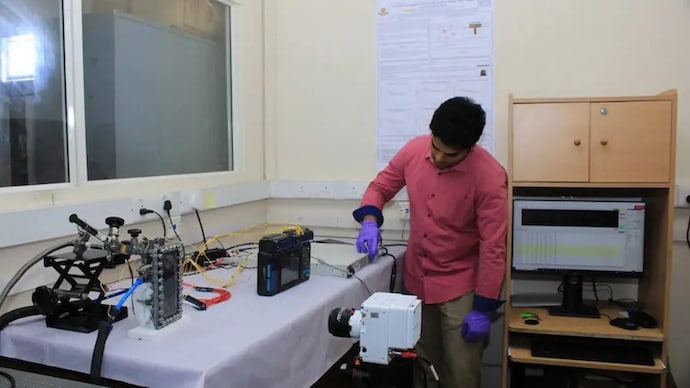
Researchers at the IIT Madras have developed and tested a new cooling configuration that could improve heat management in compact electronic devices such as smartphones, laptops, servers and defence electronics.
The study introduces a redesigned Flat Plate Pulsating Heat Pipe (FPPHP), a cooling device that transfers heat away from electronic components.
The researchers said the design addresses a growing challenge in modern electronics, where higher processing power and smaller device sizes make thermal management more difficult.
The research was led by Professor Arvind Pattamatta and Dr. Pallab Sinha Mahapatra from the Department of Mechanical Engineering, IIT Madras, along with researchers from IIT Madras, Sri Sivasubramaniya Nadar College of Engineering, Chennai, and the Instruments Research & Development Establishment (IRDE), Dehradun.
ANTIPARALLEL LAYOUT IMPROVES COOLING PERFORMANCE
Unlike conventional flat plate pulsating heat pipes, where the heat-absorbing and heat-releasing sections are located on the same side, the IIT Madras team designed an antiparallel configuration with the evaporator and condenser placed on opposite faces of the plate.
The arrangement is intended for compact electronic systems where installation space is limited.
The researchers tested two sealing methods, one using a silicon gasket and another using O-rings.
Laboratory tests showed that the O-ring configuration achieved 16% lower overall thermal resistance at higher heat loads than the gasket-based design.
At a heat input of 100 W, the O-ring configuration reduced the evaporator temperature to around 69°C, compared with about 75°C for the gasket-based system.
ALUMINIUM OUTPERFORMED COPPER
The team also compared aluminium and copper versions of the cooling device. The aluminium configuration recorded nearly 20% lower thermal resistance than the copper version while also reducing the weight of the system.
The researchers further improved performance by making the inner channel surfaces superhydrophilic. This surface treatment reduced thermal resistance by around 16% compared with untreated channels.
Explaining the technology, Professor Arvind Pattamatta said the cooling device works through a sealed chamber containing a working fluid. As heat is applied, the fluid evaporates, moves to the cooler section where it condenses, and then returns, creating a continuous cooling cycle without the need for external pumping.
Research scholar Davis T Vempany said the O-ring configuration allowed the working fluid to pulsate more freely, resulting in better heat transfer than the gasket-based design.
Dr Pallab Sinha Mahapatra said aluminium could be a practical material for commercial production because of its lower weight and improved thermal performance.
According to the researchers, the cooling technology could be used in consumer electronics, data-centre servers, defence and aerospace systems, and electric vehicles, where efficient thermal management is important for maintaining performance and reliability.
The project received support from the Research and Innovation Center–DRDO at IIT Madras Research Park.
Researchers at the IIT Madras have developed and tested a new cooling configuration that could improve heat management in compact electronic devices such as smartphones, laptops, servers and defence electronics.
The study introduces a redesigned Flat Plate Pulsating Heat Pipe (FPPHP), a cooling device that transfers heat away from electronic components.
The researchers said the design addresses a growing challenge in modern electronics, where higher processing power and smaller device sizes make thermal management more difficult.
The research was led by Professor Arvind Pattamatta and Dr. Pallab Sinha Mahapatra from the Department of Mechanical Engineering, IIT Madras, along with researchers from IIT Madras, Sri Sivasubramaniya Nadar College of Engineering, Chennai, and the Instruments Research & Development Establishment (IRDE), Dehradun.
ANTIPARALLEL LAYOUT IMPROVES COOLING PERFORMANCE
Unlike conventional flat plate pulsating heat pipes, where the heat-absorbing and heat-releasing sections are located on the same side, the IIT Madras team designed an antiparallel configuration with the evaporator and condenser placed on opposite faces of the plate.
The arrangement is intended for compact electronic systems where installation space is limited.
The researchers tested two sealing methods, one using a silicon gasket and another using O-rings.
Laboratory tests showed that the O-ring configuration achieved 16% lower overall thermal resistance at higher heat loads than the gasket-based design.
At a heat input of 100 W, the O-ring configuration reduced the evaporator temperature to around 69°C, compared with about 75°C for the gasket-based system.
ALUMINIUM OUTPERFORMED COPPER
The team also compared aluminium and copper versions of the cooling device. The aluminium configuration recorded nearly 20% lower thermal resistance than the copper version while also reducing the weight of the system.
The researchers further improved performance by making the inner channel surfaces superhydrophilic. This surface treatment reduced thermal resistance by around 16% compared with untreated channels.
Explaining the technology, Professor Arvind Pattamatta said the cooling device works through a sealed chamber containing a working fluid. As heat is applied, the fluid evaporates, moves to the cooler section where it condenses, and then returns, creating a continuous cooling cycle without the need for external pumping.
Research scholar Davis T Vempany said the O-ring configuration allowed the working fluid to pulsate more freely, resulting in better heat transfer than the gasket-based design.
Dr Pallab Sinha Mahapatra said aluminium could be a practical material for commercial production because of its lower weight and improved thermal performance.
According to the researchers, the cooling technology could be used in consumer electronics, data-centre servers, defence and aerospace systems, and electric vehicles, where efficient thermal management is important for maintaining performance and reliability.
The project received support from the Research and Innovation Center–DRDO at IIT Madras Research Park.
Researchers at the IIT Madras have developed and tested a new cooling configuration that could improve heat management in compact electronic devices such as smartphones, laptops, servers and defence electronics.
The study introduces a redesigned Flat Plate Pulsating Heat Pipe (FPPHP), a cooling device that transfers heat away from electronic components.
The researchers said the design addresses a growing challenge in modern electronics, where higher processing power and smaller device sizes make thermal management more difficult.
The research was led by Professor Arvind Pattamatta and Dr. Pallab Sinha Mahapatra from the Department of Mechanical Engineering, IIT Madras, along with researchers from IIT Madras, Sri Sivasubramaniya Nadar College of Engineering, Chennai, and the Instruments Research & Development Establishment (IRDE), Dehradun.
ANTIPARALLEL LAYOUT IMPROVES COOLING PERFORMANCE
Unlike conventional flat plate pulsating heat pipes, where the heat-absorbing and heat-releasing sections are located on the same side, the IIT Madras team designed an antiparallel configuration with the evaporator and condenser placed on opposite faces of the plate.
The arrangement is intended for compact electronic systems where installation space is limited.
The researchers tested two sealing methods, one using a silicon gasket and another using O-rings.
Laboratory tests showed that the O-ring configuration achieved 16% lower overall thermal resistance at higher heat loads than the gasket-based design.
At a heat input of 100 W, the O-ring configuration reduced the evaporator temperature to around 69°C, compared with about 75°C for the gasket-based system.
ALUMINIUM OUTPERFORMED COPPER
The team also compared aluminium and copper versions of the cooling device. The aluminium configuration recorded nearly 20% lower thermal resistance than the copper version while also reducing the weight of the system.
The researchers further improved performance by making the inner channel surfaces superhydrophilic. This surface treatment reduced thermal resistance by around 16% compared with untreated channels.
Explaining the technology, Professor Arvind Pattamatta said the cooling device works through a sealed chamber containing a working fluid. As heat is applied, the fluid evaporates, moves to the cooler section where it condenses, and then returns, creating a continuous cooling cycle without the need for external pumping.
Research scholar Davis T Vempany said the O-ring configuration allowed the working fluid to pulsate more freely, resulting in better heat transfer than the gasket-based design.
Dr Pallab Sinha Mahapatra said aluminium could be a practical material for commercial production because of its lower weight and improved thermal performance.
According to the researchers, the cooling technology could be used in consumer electronics, data-centre servers, defence and aerospace systems, and electric vehicles, where efficient thermal management is important for maintaining performance and reliability.
The project received support from the Research and Innovation Center–DRDO at IIT Madras Research Park.

