No Metro: A nightmare for Delhi commuters but Jantar Mantar protesters find a cheat code
Seventeen Metro stations in Central Delhi have been shut on Friday over security concerns amid the Cockroach Janta Party's protest at Jantar Mantar. While demonstrators found ways around the curbs on Thursday, Delhi's office-goers and daily commuters were left navigating a traffic nightmare.
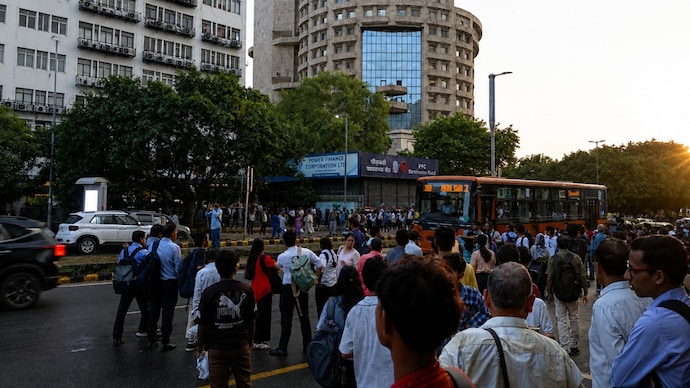
"In someone else's fight for justice, we've become the unfortunate victims," remarked an exasperated commuter at the bus stop outside the Barakhamba Road Metro station on Thursday evening. It was the second consecutive day when 16 Metro stations of Central Delhi were shut for commuters over the protest by the Cockroach Janta Party (CJP) at Jantar Mantar. The travel nightmare for lakhs of people will continue, if not increase, on Friday as 17 Metro stations have been declared shut for the day.
Like several other Metro stations in and around Connaught Place, including Rajiv Chowk, Mandi House and ITO, Barakhamba Road, outside which the exasperated person spoke to India Today Digital, had been shut by authorities, citing "security reasons". The person was among the hundreds of thousands of commuters, used to smooth travel around the city by the Delhi Metro Rail Corporation (DMRC), who were leaving their workplaces early. The traders' association of Connaught Place had asked workplaces to close by 6:30 on Thursday.
The office-goers found themselves stranded outside shuttered Metro stations, waiting for buses packed beyond capacity, autos that would not stop, and unable to book cabs due to the suspension of mobile network services. Many told India Today Digital that they weren't sure of the bus routes because they were so used to travelling by Metro.
Connaught Place (CP), one of the busiest business districts of the capital, was caught in the crosshairs as thousands of protesters descended upon Jantar Mantar and the nearby areas after the police crackdown on July 20. Protesters marching to Parliament to demand the resignation of Education Minister Dharmendra Pradhan allegedly faced brutal police action. India Today Digital has documented with evidence the use of pellet guns on protesters by security personnel in New Delhi.
The crowding at CP began on the evening of July 21, and on July 22 (Wednesday), authorities shut 16 Metro stations across central Delhi, disrupting some of the DMRC's busiest corridors, including the Blue, Yellow and Violet lines. Barring a brief reopening of a few stations on Wednesday evening, the closures continued through July 23 (Thursday), with the DMRC announcing that the affected stations would remain shut on Friday as well. In fact, the number of stations shut on Friday was increased to 17.
The official reason cited for the closures was "security reasons." Metro stations such as the one near Lok Kalyan Marg, Supreme Court, Indraprastha, Barakhamba Road, Patel Chowk, Rajiv Chowk and RK Ashram Marg were among the ones shut. With the Metro stations in CP shut, commuters faced a nightmare. But protesters, desperate to reach Jantar Mantar and CP, found a way out.
HOW PROTESTERS REACHING JANTAR MANTAR USING NDLS METRO STATION
At New Delhi Railway Station (NDLS), India Today Digital found that those headed to Jantar Mantar had already found a workaround. With Metro services at NDLS operational, thousands of protesters were using it and reaching Jantar Mantar using autos and e-rickshaws.
"We have thousands of people coming in from across Delhi and from states like Punjab, Haryana, Uttar Pradesh and Bihar," one auto-rickshaw driver told India Today Digital, repeatedly calling out, "Jantar wallahs over here, Jantar wallahs over here." Depending on the driver, fares ranged from Rs 30 to Rs 100 for the little over two-kilometre ride to Jantar Mantar from NDLS.
The autos, of course, did not go all the way to Jantar Mantar, on account of roadblocks set up by the police, with most halting in the middle of CP.
At CP, where authorities had suspended mobile internet services, India Today Digital discovered that demonstrators, some solo, some in groups, were using the area as a rendezvous point before proceeding to Jantar Mantar on foot. India Today Digital met one such group from UP's Ghazipur, as well as a group of resourceful school students who had somehow obtained their parent's permission to "voice their concerns over paper leaks".
DELHI METRO COMMUTERS CAUGHT IN TRAFFIC NIGHTMARE
Even as protesters headed towards Jantar Mantar bypassing restrictions, including shuttered Metro stations and suspended internet services, the daily commuters had a tough time.
Connaught Place, officially Rajiv Chowk, is one of the main financial, commercial and business centres in Delhi and is a major shopping, nightlife, and tourist destination. On any other day, it is served by multiple public transport networks, including buses, but importantly, several Metro stations, including Rajiv Chowk, Barakhamba Road, Shivaji Stadium, Patel Chowk among others.
But when India Today Digital reached the area at around 6 pm on Wednesday, the scene was markedly different. The Metro stations remained shuttered, leaving buses, auto-rickshaws and app cabs as the only public transport options.
To compound the disruption, the New Delhi Traders' Association on Thursday advised businesses in the vicinity of Connaught Place to close by 6.30 pm. The advisory was widely followed.
However, that also led to thousands of employees spilling onto the streets simultaneously, triggering a massive rush for the limited transport available.
Many of the commuters waiting at bus stops such as Super Bazaar and Barakhamba Road told India Today Digital they were using Delhi's bus network for the first time, having been forced off their usual Metro commute.
"I always take the Metro. This is my first time taking the bus, and I have absolutely no idea how the system works," one commuter waiting at the Super Bazaar bus stop said. "I have to go all the way to Anand Vihar," another commuter stated, adding, "I usually take the Metro, but today I have to take the bus, and that takes much more longer.
At Barakhamba Road, one of the closest Metro stations to Connaught Place and now shuttered, India Today Digital witnessed an ever-growing crowd of stranded commuters huddling beneath bus shelters and the station's locked entrances, seeking refuge from a brief spell of rain while waiting for buses that showed little sign of arriving.
METRO USERS UNAWARE OF DELHI'S BUS NETWORK
"Look at all these people. On any other day, most of them would have taken the Metro. You never see crowds like this at this bus stop," a regular bus commuter told India Today Digital at Barakhamba Road.
In the early evening, the system appeared to be coping. Between 5:30 pm and 6 pm, India Today Digital observed as many as three buses arriving simultaneously at the Super Bazaar bus stop, helping clear the growing queues. But as the evening wore on, the frequency of buses steadily declined even as the number of waiting passengers continued to swell, leaving increasingly crowded bus stops and longer waits for those trying to get home.
From around 6.30 pm onwards, the number of buses arriving at Barakhamba Road began to taper off, even as the queues continued to grow. The situation was compounded by the fact that many commuters, accustomed to travelling by Metro, were unfamiliar with Delhi's bus network and struggled to figure out which routes would take them home.
"I'm a Metro person. Today I'm standing at a bus stop, and I have no idea which bus I should be taking," one commuter told India Today Digital. Another stated, "I have to go all the way to Preet Vihar. I am just waiting here, seeing if any bus comes that will drop me off there". Traffic, meanwhile, continued to swell as a growing surge of cars, bikes and autorickshaws crowded Barakhamba road.
India Today Digital witnessed several commuters trying to flag down passing auto-rickshaws, but with little success. The few that did stop either refused to travel beyond certain destinations or quoted fares that many commuters were unwilling to pay.
As buses became fewer and the ones that did arrive were already packed to capacity, desperation began to set in. Many commuters began boarding whichever bus pulled up, hoping it would at least take them closer to home rather than waiting indefinitely for the correct route.
"Come on, let's get on that one. At least it'll get us somewhere," one commuter was overheard telling his group as they climbed aboard a bus bound for ITO, a Metro station that, like Barakhamba Road, had also been shut.
UNABLE TO BOOK CABS DUE TO SUSPENSION OF MOBILE INTERNET
The disruption was compounded by the suspension of mobile internet services in Connaught Place, leaving many unable to book cabs or auto-rickshaws through app-based platforms. With buses becoming increasingly scarce and street-hailed autos hard to find, commuters said they were running out of options.
"There's no bus coming, no auto is stopping, and I can't even book a cab. How are we supposed to get home?" one frustrated commuter told India Today Digital.
Mobile internet has remained suspended at Jantar Mantar for weeks now. But as crowds swelled and spread around CP, mobile services were suspended around a radius of 1.5 km from Jantar Mantar on Friday. That turned the situation worse for the clueless commuters.
Similar scenes of confusion were also witnessed outside the Mandi House Metro station. India Today Digital witnessed crowds of commuters awaiting buses to destinations that never seemed to arrive. At around 9:00 pm, DMRC finally relented and announced via posts on social media that the entry gates for Mandi House, Rajiv Chowk and Central Secretariat were finally open, offering some relief for commuters stranded for hours.
But with the NEET paper leak protests centred around Jantar Mantar showing no signs of easing, the disruption appears far from over. The DMRC later announced that 17 Metro stations across central Delhi would remain closed on Friday, signalling another difficult day for the capital's commuters.
For many, the day's ordeal encapsulated the unintended consequences of a city brought to a standstill. As one exhausted commuter summed it up, "In someone else's fight for justice, we have become the unfortunate victims".
"In someone else's fight for justice, we've become the unfortunate victims," remarked an exasperated commuter at the bus stop outside the Barakhamba Road Metro station on Thursday evening. It was the second consecutive day when 16 Metro stations of Central Delhi were shut for commuters over the protest by the Cockroach Janta Party (CJP) at Jantar Mantar. The travel nightmare for lakhs of people will continue, if not increase, on Friday as 17 Metro stations have been declared shut for the day.
Like several other Metro stations in and around Connaught Place, including Rajiv Chowk, Mandi House and ITO, Barakhamba Road, outside which the exasperated person spoke to India Today Digital, had been shut by authorities, citing "security reasons". The person was among the hundreds of thousands of commuters, used to smooth travel around the city by the Delhi Metro Rail Corporation (DMRC), who were leaving their workplaces early. The traders' association of Connaught Place had asked workplaces to close by 6:30 on Thursday.
The office-goers found themselves stranded outside shuttered Metro stations, waiting for buses packed beyond capacity, autos that would not stop, and unable to book cabs due to the suspension of mobile network services. Many told India Today Digital that they weren't sure of the bus routes because they were so used to travelling by Metro.
Connaught Place (CP), one of the busiest business districts of the capital, was caught in the crosshairs as thousands of protesters descended upon Jantar Mantar and the nearby areas after the police crackdown on July 20. Protesters marching to Parliament to demand the resignation of Education Minister Dharmendra Pradhan allegedly faced brutal police action. India Today Digital has documented with evidence the use of pellet guns on protesters by security personnel in New Delhi.
The crowding at CP began on the evening of July 21, and on July 22 (Wednesday), authorities shut 16 Metro stations across central Delhi, disrupting some of the DMRC's busiest corridors, including the Blue, Yellow and Violet lines. Barring a brief reopening of a few stations on Wednesday evening, the closures continued through July 23 (Thursday), with the DMRC announcing that the affected stations would remain shut on Friday as well. In fact, the number of stations shut on Friday was increased to 17.
The official reason cited for the closures was "security reasons." Metro stations such as the one near Lok Kalyan Marg, Supreme Court, Indraprastha, Barakhamba Road, Patel Chowk, Rajiv Chowk and RK Ashram Marg were among the ones shut. With the Metro stations in CP shut, commuters faced a nightmare. But protesters, desperate to reach Jantar Mantar and CP, found a way out.
HOW PROTESTERS REACHING JANTAR MANTAR USING NDLS METRO STATION
At New Delhi Railway Station (NDLS), India Today Digital found that those headed to Jantar Mantar had already found a workaround. With Metro services at NDLS operational, thousands of protesters were using it and reaching Jantar Mantar using autos and e-rickshaws.
"We have thousands of people coming in from across Delhi and from states like Punjab, Haryana, Uttar Pradesh and Bihar," one auto-rickshaw driver told India Today Digital, repeatedly calling out, "Jantar wallahs over here, Jantar wallahs over here." Depending on the driver, fares ranged from Rs 30 to Rs 100 for the little over two-kilometre ride to Jantar Mantar from NDLS.
The autos, of course, did not go all the way to Jantar Mantar, on account of roadblocks set up by the police, with most halting in the middle of CP.
At CP, where authorities had suspended mobile internet services, India Today Digital discovered that demonstrators, some solo, some in groups, were using the area as a rendezvous point before proceeding to Jantar Mantar on foot. India Today Digital met one such group from UP's Ghazipur, as well as a group of resourceful school students who had somehow obtained their parent's permission to "voice their concerns over paper leaks".
DELHI METRO COMMUTERS CAUGHT IN TRAFFIC NIGHTMARE
Even as protesters headed towards Jantar Mantar bypassing restrictions, including shuttered Metro stations and suspended internet services, the daily commuters had a tough time.
Connaught Place, officially Rajiv Chowk, is one of the main financial, commercial and business centres in Delhi and is a major shopping, nightlife, and tourist destination. On any other day, it is served by multiple public transport networks, including buses, but importantly, several Metro stations, including Rajiv Chowk, Barakhamba Road, Shivaji Stadium, Patel Chowk among others.
But when India Today Digital reached the area at around 6 pm on Wednesday, the scene was markedly different. The Metro stations remained shuttered, leaving buses, auto-rickshaws and app cabs as the only public transport options.
To compound the disruption, the New Delhi Traders' Association on Thursday advised businesses in the vicinity of Connaught Place to close by 6.30 pm. The advisory was widely followed.
However, that also led to thousands of employees spilling onto the streets simultaneously, triggering a massive rush for the limited transport available.
Many of the commuters waiting at bus stops such as Super Bazaar and Barakhamba Road told India Today Digital they were using Delhi's bus network for the first time, having been forced off their usual Metro commute.
"I always take the Metro. This is my first time taking the bus, and I have absolutely no idea how the system works," one commuter waiting at the Super Bazaar bus stop said. "I have to go all the way to Anand Vihar," another commuter stated, adding, "I usually take the Metro, but today I have to take the bus, and that takes much more longer.
At Barakhamba Road, one of the closest Metro stations to Connaught Place and now shuttered, India Today Digital witnessed an ever-growing crowd of stranded commuters huddling beneath bus shelters and the station's locked entrances, seeking refuge from a brief spell of rain while waiting for buses that showed little sign of arriving.
METRO USERS UNAWARE OF DELHI'S BUS NETWORK
"Look at all these people. On any other day, most of them would have taken the Metro. You never see crowds like this at this bus stop," a regular bus commuter told India Today Digital at Barakhamba Road.
In the early evening, the system appeared to be coping. Between 5:30 pm and 6 pm, India Today Digital observed as many as three buses arriving simultaneously at the Super Bazaar bus stop, helping clear the growing queues. But as the evening wore on, the frequency of buses steadily declined even as the number of waiting passengers continued to swell, leaving increasingly crowded bus stops and longer waits for those trying to get home.
From around 6.30 pm onwards, the number of buses arriving at Barakhamba Road began to taper off, even as the queues continued to grow. The situation was compounded by the fact that many commuters, accustomed to travelling by Metro, were unfamiliar with Delhi's bus network and struggled to figure out which routes would take them home.
"I'm a Metro person. Today I'm standing at a bus stop, and I have no idea which bus I should be taking," one commuter told India Today Digital. Another stated, "I have to go all the way to Preet Vihar. I am just waiting here, seeing if any bus comes that will drop me off there". Traffic, meanwhile, continued to swell as a growing surge of cars, bikes and autorickshaws crowded Barakhamba road.
India Today Digital witnessed several commuters trying to flag down passing auto-rickshaws, but with little success. The few that did stop either refused to travel beyond certain destinations or quoted fares that many commuters were unwilling to pay.
As buses became fewer and the ones that did arrive were already packed to capacity, desperation began to set in. Many commuters began boarding whichever bus pulled up, hoping it would at least take them closer to home rather than waiting indefinitely for the correct route.
"Come on, let's get on that one. At least it'll get us somewhere," one commuter was overheard telling his group as they climbed aboard a bus bound for ITO, a Metro station that, like Barakhamba Road, had also been shut.
UNABLE TO BOOK CABS DUE TO SUSPENSION OF MOBILE INTERNET
The disruption was compounded by the suspension of mobile internet services in Connaught Place, leaving many unable to book cabs or auto-rickshaws through app-based platforms. With buses becoming increasingly scarce and street-hailed autos hard to find, commuters said they were running out of options.
"There's no bus coming, no auto is stopping, and I can't even book a cab. How are we supposed to get home?" one frustrated commuter told India Today Digital.
Mobile internet has remained suspended at Jantar Mantar for weeks now. But as crowds swelled and spread around CP, mobile services were suspended around a radius of 1.5 km from Jantar Mantar on Friday. That turned the situation worse for the clueless commuters.
Similar scenes of confusion were also witnessed outside the Mandi House Metro station. India Today Digital witnessed crowds of commuters awaiting buses to destinations that never seemed to arrive. At around 9:00 pm, DMRC finally relented and announced via posts on social media that the entry gates for Mandi House, Rajiv Chowk and Central Secretariat were finally open, offering some relief for commuters stranded for hours.
But with the NEET paper leak protests centred around Jantar Mantar showing no signs of easing, the disruption appears far from over. The DMRC later announced that 17 Metro stations across central Delhi would remain closed on Friday, signalling another difficult day for the capital's commuters.
For many, the day's ordeal encapsulated the unintended consequences of a city brought to a standstill. As one exhausted commuter summed it up, "In someone else's fight for justice, we have become the unfortunate victims".
"In someone else's fight for justice, we've become the unfortunate victims," remarked an exasperated commuter at the bus stop outside the Barakhamba Road Metro station on Thursday evening. It was the second consecutive day when 16 Metro stations of Central Delhi were shut for commuters over the protest by the Cockroach Janta Party (CJP) at Jantar Mantar. The travel nightmare for lakhs of people will continue, if not increase, on Friday as 17 Metro stations have been declared shut for the day.
Like several other Metro stations in and around Connaught Place, including Rajiv Chowk, Mandi House and ITO, Barakhamba Road, outside which the exasperated person spoke to India Today Digital, had been shut by authorities, citing "security reasons". The person was among the hundreds of thousands of commuters, used to smooth travel around the city by the Delhi Metro Rail Corporation (DMRC), who were leaving their workplaces early. The traders' association of Connaught Place had asked workplaces to close by 6:30 on Thursday.
The office-goers found themselves stranded outside shuttered Metro stations, waiting for buses packed beyond capacity, autos that would not stop, and unable to book cabs due to the suspension of mobile network services. Many told India Today Digital that they weren't sure of the bus routes because they were so used to travelling by Metro.
Connaught Place (CP), one of the busiest business districts of the capital, was caught in the crosshairs as thousands of protesters descended upon Jantar Mantar and the nearby areas after the police crackdown on July 20. Protesters marching to Parliament to demand the resignation of Education Minister Dharmendra Pradhan allegedly faced brutal police action. India Today Digital has documented with evidence the use of pellet guns on protesters by security personnel in New Delhi.
The crowding at CP began on the evening of July 21, and on July 22 (Wednesday), authorities shut 16 Metro stations across central Delhi, disrupting some of the DMRC's busiest corridors, including the Blue, Yellow and Violet lines. Barring a brief reopening of a few stations on Wednesday evening, the closures continued through July 23 (Thursday), with the DMRC announcing that the affected stations would remain shut on Friday as well. In fact, the number of stations shut on Friday was increased to 17.
The official reason cited for the closures was "security reasons." Metro stations such as the one near Lok Kalyan Marg, Supreme Court, Indraprastha, Barakhamba Road, Patel Chowk, Rajiv Chowk and RK Ashram Marg were among the ones shut. With the Metro stations in CP shut, commuters faced a nightmare. But protesters, desperate to reach Jantar Mantar and CP, found a way out.
HOW PROTESTERS REACHING JANTAR MANTAR USING NDLS METRO STATION
At New Delhi Railway Station (NDLS), India Today Digital found that those headed to Jantar Mantar had already found a workaround. With Metro services at NDLS operational, thousands of protesters were using it and reaching Jantar Mantar using autos and e-rickshaws.
"We have thousands of people coming in from across Delhi and from states like Punjab, Haryana, Uttar Pradesh and Bihar," one auto-rickshaw driver told India Today Digital, repeatedly calling out, "Jantar wallahs over here, Jantar wallahs over here." Depending on the driver, fares ranged from Rs 30 to Rs 100 for the little over two-kilometre ride to Jantar Mantar from NDLS.
The autos, of course, did not go all the way to Jantar Mantar, on account of roadblocks set up by the police, with most halting in the middle of CP.
At CP, where authorities had suspended mobile internet services, India Today Digital discovered that demonstrators, some solo, some in groups, were using the area as a rendezvous point before proceeding to Jantar Mantar on foot. India Today Digital met one such group from UP's Ghazipur, as well as a group of resourceful school students who had somehow obtained their parent's permission to "voice their concerns over paper leaks".
DELHI METRO COMMUTERS CAUGHT IN TRAFFIC NIGHTMARE
Even as protesters headed towards Jantar Mantar bypassing restrictions, including shuttered Metro stations and suspended internet services, the daily commuters had a tough time.
Connaught Place, officially Rajiv Chowk, is one of the main financial, commercial and business centres in Delhi and is a major shopping, nightlife, and tourist destination. On any other day, it is served by multiple public transport networks, including buses, but importantly, several Metro stations, including Rajiv Chowk, Barakhamba Road, Shivaji Stadium, Patel Chowk among others.
But when India Today Digital reached the area at around 6 pm on Wednesday, the scene was markedly different. The Metro stations remained shuttered, leaving buses, auto-rickshaws and app cabs as the only public transport options.
To compound the disruption, the New Delhi Traders' Association on Thursday advised businesses in the vicinity of Connaught Place to close by 6.30 pm. The advisory was widely followed.
However, that also led to thousands of employees spilling onto the streets simultaneously, triggering a massive rush for the limited transport available.
Many of the commuters waiting at bus stops such as Super Bazaar and Barakhamba Road told India Today Digital they were using Delhi's bus network for the first time, having been forced off their usual Metro commute.
"I always take the Metro. This is my first time taking the bus, and I have absolutely no idea how the system works," one commuter waiting at the Super Bazaar bus stop said. "I have to go all the way to Anand Vihar," another commuter stated, adding, "I usually take the Metro, but today I have to take the bus, and that takes much more longer.
At Barakhamba Road, one of the closest Metro stations to Connaught Place and now shuttered, India Today Digital witnessed an ever-growing crowd of stranded commuters huddling beneath bus shelters and the station's locked entrances, seeking refuge from a brief spell of rain while waiting for buses that showed little sign of arriving.
METRO USERS UNAWARE OF DELHI'S BUS NETWORK
"Look at all these people. On any other day, most of them would have taken the Metro. You never see crowds like this at this bus stop," a regular bus commuter told India Today Digital at Barakhamba Road.
In the early evening, the system appeared to be coping. Between 5:30 pm and 6 pm, India Today Digital observed as many as three buses arriving simultaneously at the Super Bazaar bus stop, helping clear the growing queues. But as the evening wore on, the frequency of buses steadily declined even as the number of waiting passengers continued to swell, leaving increasingly crowded bus stops and longer waits for those trying to get home.
From around 6.30 pm onwards, the number of buses arriving at Barakhamba Road began to taper off, even as the queues continued to grow. The situation was compounded by the fact that many commuters, accustomed to travelling by Metro, were unfamiliar with Delhi's bus network and struggled to figure out which routes would take them home.
"I'm a Metro person. Today I'm standing at a bus stop, and I have no idea which bus I should be taking," one commuter told India Today Digital. Another stated, "I have to go all the way to Preet Vihar. I am just waiting here, seeing if any bus comes that will drop me off there". Traffic, meanwhile, continued to swell as a growing surge of cars, bikes and autorickshaws crowded Barakhamba road.
India Today Digital witnessed several commuters trying to flag down passing auto-rickshaws, but with little success. The few that did stop either refused to travel beyond certain destinations or quoted fares that many commuters were unwilling to pay.
As buses became fewer and the ones that did arrive were already packed to capacity, desperation began to set in. Many commuters began boarding whichever bus pulled up, hoping it would at least take them closer to home rather than waiting indefinitely for the correct route.
"Come on, let's get on that one. At least it'll get us somewhere," one commuter was overheard telling his group as they climbed aboard a bus bound for ITO, a Metro station that, like Barakhamba Road, had also been shut.
UNABLE TO BOOK CABS DUE TO SUSPENSION OF MOBILE INTERNET
The disruption was compounded by the suspension of mobile internet services in Connaught Place, leaving many unable to book cabs or auto-rickshaws through app-based platforms. With buses becoming increasingly scarce and street-hailed autos hard to find, commuters said they were running out of options.
"There's no bus coming, no auto is stopping, and I can't even book a cab. How are we supposed to get home?" one frustrated commuter told India Today Digital.
Mobile internet has remained suspended at Jantar Mantar for weeks now. But as crowds swelled and spread around CP, mobile services were suspended around a radius of 1.5 km from Jantar Mantar on Friday. That turned the situation worse for the clueless commuters.
Similar scenes of confusion were also witnessed outside the Mandi House Metro station. India Today Digital witnessed crowds of commuters awaiting buses to destinations that never seemed to arrive. At around 9:00 pm, DMRC finally relented and announced via posts on social media that the entry gates for Mandi House, Rajiv Chowk and Central Secretariat were finally open, offering some relief for commuters stranded for hours.
But with the NEET paper leak protests centred around Jantar Mantar showing no signs of easing, the disruption appears far from over. The DMRC later announced that 17 Metro stations across central Delhi would remain closed on Friday, signalling another difficult day for the capital's commuters.
For many, the day's ordeal encapsulated the unintended consequences of a city brought to a standstill. As one exhausted commuter summed it up, "In someone else's fight for justice, we have become the unfortunate victims".

