How UP's Meerut is emerging as India's biggest sports goods hub
Meerut's sports goods industry is expanding beyond cricket bats into multiple categories with policy support and new technology. Manufacturers say subsidies, cheaper finance and rising women's participation are powering growth, though they now want a dedicated cluster and more land.
Meerut, long regarded as India's cricket bat capital, is rapidly transforming into a diversified sports goods manufacturing hub, with industry leaders attributing the shift to a combination of government incentives, modern technology and growing domestic demand for sports equipment.
Backed by the Uttar Pradesh government's industrial policies, including interest-free loans, subsidies of up to 50 per cent on machinery, the One District One Product (ODOP) scheme and the Centre's Khelo India initiative, the city is witnessing a surge in investment, production and employment, particularly among women.
FROM CRICKET BATS TO MULTI-SPORTS MANUFACTURING
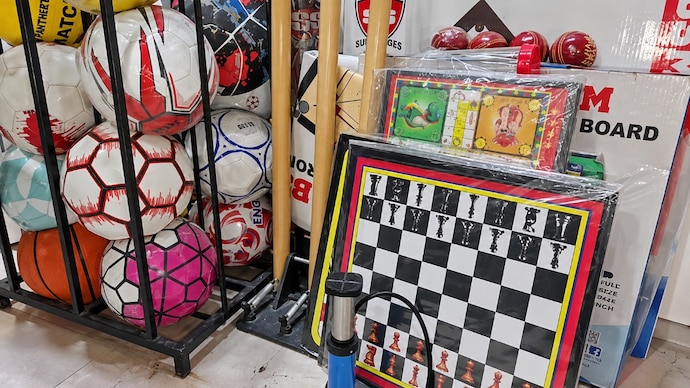
While Meerut has traditionally been known for its wooden cricket bats, manufacturers are now producing a much wider range of sporting goods, including equipment for athletics, badminton, football, gymnastics, table tennis and carrom, besides plastic and fibre cricket bats.
Industry representatives say the shift towards plastic bats has accelerated in recent years amid rising timber costs and increasing environmental concerns.
Advances in manufacturing technology have also made plastic bats lighter and more comparable to wooden bats, boosting their popularity in indoor cricket, box cricket and tennis-ball cricket.
GOVT SCHEMES DRIVE EXPANSION
Charanjeet Bhatia, owner of Buchi Sports, said Meerut and Jalandhar remain India's two biggest sports manufacturing centres, but Meerut's product basket has expanded significantly beyond cricket equipment.
He said government support has played a key role in this transformation.
According to Bhatia, manufacturers are eligible for subsidies of up to 50 per cent for installing new machinery, while interest-free loans have enabled many small businesses to modernise and expand.
His company recently installed a plastic bat manufacturing unit after availing benefits under the subsidy scheme.
He claimed that the number of sports manufacturing units in Meerut has grown from just four or five several years ago to nearly 5,000-7,000 large and small units today.
Industry estimates place the sector's annual turnover at Rs 15,000-20,000 crore.
His factory alone manufactures 8,000 to 10,000 plastic cricket bats every day, with demand continuing to rise across different formats of recreational cricket.
KHELO INDIA GIVES INDUSTRY FRESH MOMENTUM
Aditya Mahajan, owner of BDM Sports, said the government's Khelo India programme, along with the Uttar Pradesh government's industrial policies, has given Meerut's sports manufacturing sector a completely new identity.
He said the city, once largely associated with cricket bats, now manufactures a wide range of sports equipment, including badminton racquets, tennis equipment, table tennis products, carrom boards and plastic sports goods.
Mahajan said the state's interest-free loan scheme has proved particularly beneficial for small manufacturers.
Under the scheme, businesses do not pay interest during the first year, while interest rates remain low thereafter, making expansion more affordable for smaller businesses.
MORE WOMEN JOIN WORKFORCE
Industry representatives also point to a visible increase in women's participation in the sector.
Mahajan said skill development centres established in villages have helped train women for factory jobs, increasing their representation in the workforce from around 1 per cent earlier to nearly 9-10 per cent today.
The increased participation has also helped address labour shortages faced by manufacturers.
Women employed in the industry say both employment opportunities and workplace conditions have improved over the years.
Vimalesh, a resident of Noor Nagar who has been working in a sports goods factory for the past six months, said more women are now joining factories and feel safer at workplaces than before.
Another worker, Anju, said women are increasingly entering the sector, allowing them to contribute to their families' incomes.
Shimla, who has worked in the sports industry for nearly 23 years, said facilities for women have improved considerably over time and new female workers are being recruited every year.
INDUSTRY SEEKS SPORTS CLUSTER
Despite the sector's rapid growth, manufacturers say further infrastructure support will be necessary to sustain expansion.
Entrepreneurs have urged the state government to develop a dedicated sports manufacturing cluster and allocate additional industrial land to meet growing demand.
They believe such measures could strengthen Meerut's position in global sports goods manufacturing and help the city emerge as one of the world's leading production centres for sporting equipment.
Meerut, long regarded as India's cricket bat capital, is rapidly transforming into a diversified sports goods manufacturing hub, with industry leaders attributing the shift to a combination of government incentives, modern technology and growing domestic demand for sports equipment.
Backed by the Uttar Pradesh government's industrial policies, including interest-free loans, subsidies of up to 50 per cent on machinery, the One District One Product (ODOP) scheme and the Centre's Khelo India initiative, the city is witnessing a surge in investment, production and employment, particularly among women.
FROM CRICKET BATS TO MULTI-SPORTS MANUFACTURING
While Meerut has traditionally been known for its wooden cricket bats, manufacturers are now producing a much wider range of sporting goods, including equipment for athletics, badminton, football, gymnastics, table tennis and carrom, besides plastic and fibre cricket bats.
Industry representatives say the shift towards plastic bats has accelerated in recent years amid rising timber costs and increasing environmental concerns.
Advances in manufacturing technology have also made plastic bats lighter and more comparable to wooden bats, boosting their popularity in indoor cricket, box cricket and tennis-ball cricket.
GOVT SCHEMES DRIVE EXPANSION
Charanjeet Bhatia, owner of Buchi Sports, said Meerut and Jalandhar remain India's two biggest sports manufacturing centres, but Meerut's product basket has expanded significantly beyond cricket equipment.
He said government support has played a key role in this transformation.
According to Bhatia, manufacturers are eligible for subsidies of up to 50 per cent for installing new machinery, while interest-free loans have enabled many small businesses to modernise and expand.
His company recently installed a plastic bat manufacturing unit after availing benefits under the subsidy scheme.
He claimed that the number of sports manufacturing units in Meerut has grown from just four or five several years ago to nearly 5,000-7,000 large and small units today.
Industry estimates place the sector's annual turnover at Rs 15,000-20,000 crore.
His factory alone manufactures 8,000 to 10,000 plastic cricket bats every day, with demand continuing to rise across different formats of recreational cricket.
KHELO INDIA GIVES INDUSTRY FRESH MOMENTUM
Aditya Mahajan, owner of BDM Sports, said the government's Khelo India programme, along with the Uttar Pradesh government's industrial policies, has given Meerut's sports manufacturing sector a completely new identity.
He said the city, once largely associated with cricket bats, now manufactures a wide range of sports equipment, including badminton racquets, tennis equipment, table tennis products, carrom boards and plastic sports goods.
Mahajan said the state's interest-free loan scheme has proved particularly beneficial for small manufacturers.
Under the scheme, businesses do not pay interest during the first year, while interest rates remain low thereafter, making expansion more affordable for smaller businesses.
MORE WOMEN JOIN WORKFORCE
Industry representatives also point to a visible increase in women's participation in the sector.
Mahajan said skill development centres established in villages have helped train women for factory jobs, increasing their representation in the workforce from around 1 per cent earlier to nearly 9-10 per cent today.
The increased participation has also helped address labour shortages faced by manufacturers.
Women employed in the industry say both employment opportunities and workplace conditions have improved over the years.
Vimalesh, a resident of Noor Nagar who has been working in a sports goods factory for the past six months, said more women are now joining factories and feel safer at workplaces than before.
Another worker, Anju, said women are increasingly entering the sector, allowing them to contribute to their families' incomes.
Shimla, who has worked in the sports industry for nearly 23 years, said facilities for women have improved considerably over time and new female workers are being recruited every year.
INDUSTRY SEEKS SPORTS CLUSTER
Despite the sector's rapid growth, manufacturers say further infrastructure support will be necessary to sustain expansion.
Entrepreneurs have urged the state government to develop a dedicated sports manufacturing cluster and allocate additional industrial land to meet growing demand.
They believe such measures could strengthen Meerut's position in global sports goods manufacturing and help the city emerge as one of the world's leading production centres for sporting equipment.

