Odisha | Odisha awakes its past
The homes of its progenitors, a Kalinga statue, a seaside Tagore nest—Odisha renews its heritage
In his fifth and last term as chief minister beginning 2019, Biju Janata Dal supremo Naveen Patnaik had staked a lot of political capital on what seemed an unlikely project for him—an ambitious redevelopment of Odisha’s temple ecosystem. Its flagship, the Puri heritage corridor, was in fact conceived in 2016—among the first in a rash of projects across India. Now, two years after coming to power on the plank of Odia pride, the BJP government is embossing its own stamp on heritage. Hundreds of crores of rupees are being poured into projects designed to preserve historical memory, celebrate regional icons and strengthen Odia identity.
In his fifth and last term as chief minister beginning 2019, Biju Janata Dal supremo Naveen Patnaik had staked a lot of political capital on what seemed an unlikely project for him—an ambitious redevelopment of Odisha’s temple ecosystem. Its flagship, the Puri heritage corridor, was in fact conceived in 2016—among the first in a rash of projects across India. Now, two years after coming to power on the plank of Odia pride, the BJP government is embossing its own stamp on heritage. Hundreds of crores of rupees are being poured into projects designed to preserve historical memory, celebrate regional icons and strengthen Odia identity.
In his fifth and last term as chief minister beginning 2019, Biju Janata Dal supremo Naveen Patnaik had staked a lot of political capital on what seemed an unlikely project for him—an ambitious redevelopment of Odisha’s temple ecosystem. Its flagship, the Puri heritage corridor, was in fact conceived in 2016—among the first in a rash of projects across India. Now, two years after coming to power on the plank of Odia pride, the BJP government is embossing its own stamp on heritage. Hundreds of crores of rupees are being poured into projects designed to preserve historical memory, celebrate regional icons and strengthen Odia identity.
The most ambitious of these initiatives is the Baraputra Aitihya Gram Yojana, under which the state plans to develop the native villages, birthplaces and residences of eminent Odia personalities and historical figures—25 to begin with. With an allocation of Rs 15 crore for each site, the programme is expected to transform these locations into “living heritage spaces”. The idea is “not simply conservation”, says an official in the culture department. “We want people, especially the youth, to engage with the lives and contributions of these personalities through museums, interpretation centres, cultural programmes and local economic activities.”
The list of sites reflects Odisha’s attempt to weave together multiple historical strands. To begin with, the native places of the ‘Panchasakhas’. These are the five 16th-century poet-saints of Odisha, all contemporaries of Bhakti- era luminary Chaitanya Mahaprabhu, who are seen as progenitors of the golden age of Odia literature: Balaram Das, Atibadi Jagannath Das, Mahapurusha Achyutananda Das, Jasobanta Das and Sishu Ananta Das. Then comes a diverse pantheon: literary giant Fakir Mohan Senapati, the first chief minister Dr Harekrushna Mahtab, playwright Nityananda Mahapatra, tribal leader Dharanidhar Bhuyan, Ol Chiki script creator Dr Raghunath Murmu, freedom fighter Laxmi Indira Panda and the legendary child martyr, Baji Rout.
Personalities associated with Odisha’s resistance traditions, including the Paika Rebellion, the state’s unification movement and India’s freedom struggle are a special part of the list. Each site will feature open-air theatres and dedicated spaces for showcasing and selling local products, so as to create a live ambience, besides interpretation centres and museums that will attempt to lure in the crowds for a deeper dive. District collectors and the state archaeology department have been tasked with identifying land and initiating the tendering process.
A TAGOREAN DETOUR
In a parallel project, the state has approved Rs 12 crore for the restoration of Pather Puri, the historic seaside residence in Puri associated with Rabindranath Tagore. The project has been entrusted to the Indian National Trust for Art and Cultural Heritage (INTACH). Tagore frequently stayed at the property during his visits to Odisha. During his final visit in April-May 1939, he wrote at least three poems—Pravasi, Janmadin and Epare Opare. He had visited Odisha as a state guest of Bishwanath Das, then prime minister of what was called Orissa province. Before leaving, Tagore expressed his desire to donate the property to the government. The building later served as a hostel for students of Puri’s Samanta Chandra Sekhar College before gradually falling into disrepair.
“The building will be restored completely to what it once was,” says Anil Kumar Dhir of INTACH. “We want visitors to experience the atmosphere that Tagore himself encountered during his stay in Puri. It will become a major cultural and tourist attraction. We are exploring ways to source and display artefacts connected to the poet, and the museum will include interactive exhibits and activities that allow visitors to engage with his life and work in meaningful ways.”
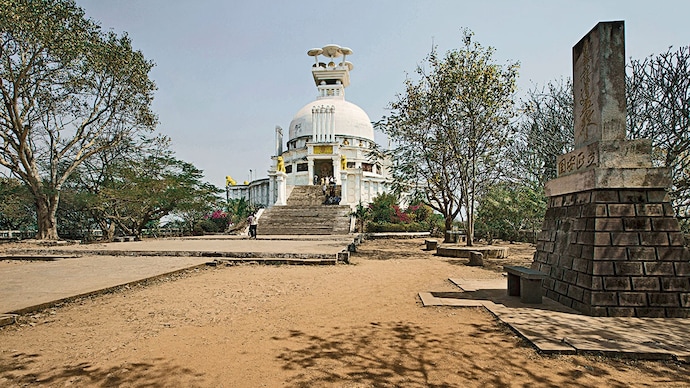
Another project under consideration seeks to connect Odisha’s ancient history with its contemporary identity. The government is planning to construct the Tarpan Sheela Stambh near Dhauli, overlooking the historic battlefield of the Kalinga war. The proposal originated from noted Odia author and academic Dr Pratibha Ray. Officials say the proposed pillar would be large enough to be visible from the Bhubaneswar-Puri national highway, much like the existing Peace Pagoda built with Japanese support. While emperor Ashoka is central to the narrative, the memorial is also expected to highlight Karuvaki, the Kalinga woman believed to have resisted Ashoka before later becoming his fourth wife. Two locations have been shortlisted.
The state has also enlisted IIT Kharagpur and the School of Planning and Architecture to provide technical expertise for preserving nearly 3,000 identified artefacts scattered across Odisha. Some officials in the culture department admit to the difficulty in finding organisations with the expertise needed to implement a project like Baraputra Aitihya Gram Yojana. Yet, with the BJP’s cultural identity plank behind the endeavour, forward movement is likelier than not.

