Trump links Canada wildfire smoke to tariffs, calls it wilful negligence
Donald Trump blamed Canada for wildfire smoke drifting into the United States and said he would raise the matter with Prime Minister Mark Carney. His remarks tied worsening air quality to a fresh tariff warning, adding to wider trade tensions between Washington and Ottawa.
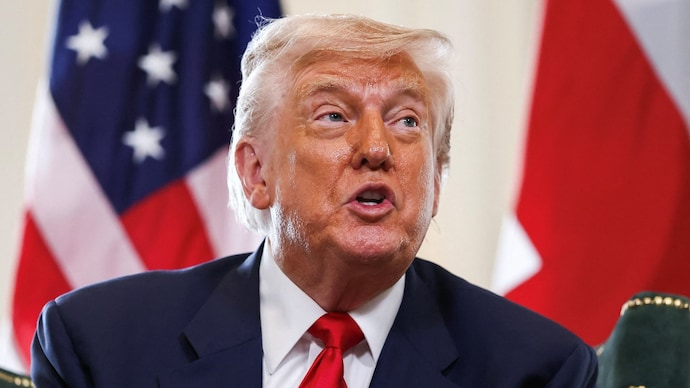
President Donald Trump on Friday blamed Canada for the wildfire smoke blanketing large parts of the Midwestern and eastern United States, accusing Ottawa of failing to manage its forests properly and warning that the economic cost of the pollution could be added to tariffs already imposed on Canadian goods.
In a post on Truth Social, Trump said the United States was being "unnecessarily invaded by filthy, polluted, and unhealthy air" from Canadian wildfires, calling the deteriorating air quality "dangerous" and "totally unacceptable." He said he planned to speak with Canadian Prime Minister Mark Carney to discuss the issue.
"We are holding Canada responsible for the fact that they are not properly maintaining their Forests, and Brush therein," Trump wrote, adding that he would ask the Canadian government what steps it intended to take to address the recurring problem.
'SMOKE A RESULT OF WILLFUL NEGLIGENCE'
The US President also described the smoke as a result of "willful negligence" and said the annual episodes were costing the United States billions of dollars. He warned that the financial impact of the pollution "must of necessity be added to the TARIFFS Canada is currently paying."
Trump's remarks came as more than 100 million people across 18 US states and the District of Columbia were under air quality alerts due to smoke from Canadian wildfires. According to US authorities, "very unhealthy" and "hazardous" air conditions stretched from northeast Minnesota to southeast Virginia.
The comments add to growing tensions between Washington and Ottawa over trade and tariffs.
CANADA FACES TRUMP HEAT, AGAIN
Following a recent Supreme Court ruling that limited Trump's ability to impose tariffs using emergency powers, the administration has turned to alternative legal mechanisms that require investigations and public comment periods before new duties can take effect. While the ruling has slowed the tariff process, the White House has said it remains committed to restoring US tariff levels to those seen earlier this year.
Canada has remained a frequent target of Trump's trade criticism. He has repeatedly accused the country of unfair lumber trade practices and of taking away American auto jobs. Although many Canadian exports have been protected under the United States-Mexico-Canada Agreement (USMCA), negotiated during Trump's first term, the administration earlier this month declined to renew the trade pact in its current form, raising fresh uncertainty over future US-Canada trade relations.
President Donald Trump on Friday blamed Canada for the wildfire smoke blanketing large parts of the Midwestern and eastern United States, accusing Ottawa of failing to manage its forests properly and warning that the economic cost of the pollution could be added to tariffs already imposed on Canadian goods.
In a post on Truth Social, Trump said the United States was being "unnecessarily invaded by filthy, polluted, and unhealthy air" from Canadian wildfires, calling the deteriorating air quality "dangerous" and "totally unacceptable." He said he planned to speak with Canadian Prime Minister Mark Carney to discuss the issue.
"We are holding Canada responsible for the fact that they are not properly maintaining their Forests, and Brush therein," Trump wrote, adding that he would ask the Canadian government what steps it intended to take to address the recurring problem.
'SMOKE A RESULT OF WILLFUL NEGLIGENCE'
The US President also described the smoke as a result of "willful negligence" and said the annual episodes were costing the United States billions of dollars. He warned that the financial impact of the pollution "must of necessity be added to the TARIFFS Canada is currently paying."
Trump's remarks came as more than 100 million people across 18 US states and the District of Columbia were under air quality alerts due to smoke from Canadian wildfires. According to US authorities, "very unhealthy" and "hazardous" air conditions stretched from northeast Minnesota to southeast Virginia.
The comments add to growing tensions between Washington and Ottawa over trade and tariffs.
CANADA FACES TRUMP HEAT, AGAIN
Following a recent Supreme Court ruling that limited Trump's ability to impose tariffs using emergency powers, the administration has turned to alternative legal mechanisms that require investigations and public comment periods before new duties can take effect. While the ruling has slowed the tariff process, the White House has said it remains committed to restoring US tariff levels to those seen earlier this year.
Canada has remained a frequent target of Trump's trade criticism. He has repeatedly accused the country of unfair lumber trade practices and of taking away American auto jobs. Although many Canadian exports have been protected under the United States-Mexico-Canada Agreement (USMCA), negotiated during Trump's first term, the administration earlier this month declined to renew the trade pact in its current form, raising fresh uncertainty over future US-Canada trade relations.
President Donald Trump on Friday blamed Canada for the wildfire smoke blanketing large parts of the Midwestern and eastern United States, accusing Ottawa of failing to manage its forests properly and warning that the economic cost of the pollution could be added to tariffs already imposed on Canadian goods.
In a post on Truth Social, Trump said the United States was being "unnecessarily invaded by filthy, polluted, and unhealthy air" from Canadian wildfires, calling the deteriorating air quality "dangerous" and "totally unacceptable." He said he planned to speak with Canadian Prime Minister Mark Carney to discuss the issue.
"We are holding Canada responsible for the fact that they are not properly maintaining their Forests, and Brush therein," Trump wrote, adding that he would ask the Canadian government what steps it intended to take to address the recurring problem.
'SMOKE A RESULT OF WILLFUL NEGLIGENCE'
The US President also described the smoke as a result of "willful negligence" and said the annual episodes were costing the United States billions of dollars. He warned that the financial impact of the pollution "must of necessity be added to the TARIFFS Canada is currently paying."
Trump's remarks came as more than 100 million people across 18 US states and the District of Columbia were under air quality alerts due to smoke from Canadian wildfires. According to US authorities, "very unhealthy" and "hazardous" air conditions stretched from northeast Minnesota to southeast Virginia.
The comments add to growing tensions between Washington and Ottawa over trade and tariffs.
CANADA FACES TRUMP HEAT, AGAIN
Following a recent Supreme Court ruling that limited Trump's ability to impose tariffs using emergency powers, the administration has turned to alternative legal mechanisms that require investigations and public comment periods before new duties can take effect. While the ruling has slowed the tariff process, the White House has said it remains committed to restoring US tariff levels to those seen earlier this year.
Canada has remained a frequent target of Trump's trade criticism. He has repeatedly accused the country of unfair lumber trade practices and of taking away American auto jobs. Although many Canadian exports have been protected under the United States-Mexico-Canada Agreement (USMCA), negotiated during Trump's first term, the administration earlier this month declined to renew the trade pact in its current form, raising fresh uncertainty over future US-Canada trade relations.

