Jewellery | Now, men bling it on
Urban men across India are taking to jewels not just for ceremonial but everyday use. Spurred by celebrity adoption and dedicated product lines, the burgeoning male jewellery segment now constitutes 10-15 per cent of the overall jewellery market
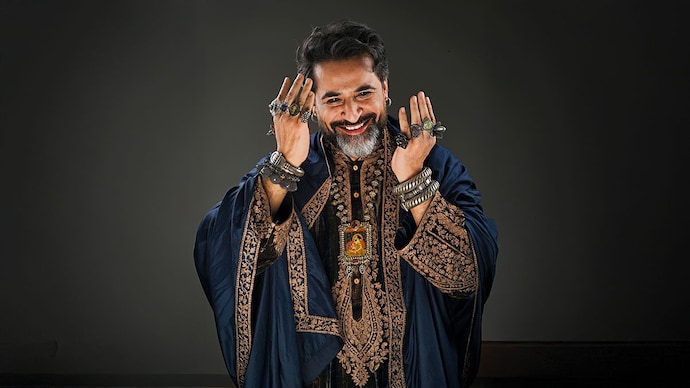
When Akshay Jhawar, 36, a textiles exporter in Surat, walked into a private jewellery show last year looking for some glint, he itched for something radical, something that quietly announced his personality to every room he walked into, unfettered by the shirt-and-tie decorum of formal society. The only jewellery he had worn since birth was a gold ring on his ear—a community ritual—and he wanted something more assertive. Venus Jewels, the diamond and solitaire exporters that had organised the show, had done so reluctantly, too, unconvinced by the profitability of male jewellery for anything other than ceremonial purchases. The industry truism, after all, was that men buy, women wear.
When Akshay Jhawar, 36, a textiles exporter in Surat, walked into a private jewellery show last year looking for some glint, he itched for something radical, something that quietly announced his personality to every room he walked into, unfettered by the shirt-and-tie decorum of formal society. The only jewellery he had worn since birth was a gold ring on his ear—a community ritual—and he wanted something more assertive. Venus Jewels, the diamond and solitaire exporters that had organised the show, had done so reluctantly, too, unconvinced by the profitability of male jewellery for anything other than ceremonial purchases. The industry truism, after all, was that men buy, women wear.
When Akshay Jhawar, 36, a textiles exporter in Surat, walked into a private jewellery show last year looking for some glint, he itched for something radical, something that quietly announced his personality to every room he walked into, unfettered by the shirt-and-tie decorum of formal society. The only jewellery he had worn since birth was a gold ring on his ear—a community ritual—and he wanted something more assertive. Venus Jewels, the diamond and solitaire exporters that had organised the show, had done so reluctantly, too, unconvinced by the profitability of male jewellery for anything other than ceremonial purchases. The industry truism, after all, was that men buy, women wear.
But that’s not true anymore.
“I don’t have words for it,” says Jhawar, sporting a bright stud he fell in love with at the display. “I felt like I had found my soulmate. When I come in somewhere wearing a solitaire, I feel like I own the room.” His surprise is echoed by Akshat Shah, partner at Venus Jewels. “It was truly an eye-opener. We underestimated the demand for men’s jewellery,” he says. The pieces on display that day, costing anywhere from Rs 2 lakh to Rs 2 crore, were “lapped up”, he says, “and people wanted more!”
Jhawar is far from the only man in Indian cities taking to jewellery for everyday use. He and others like him are reviving a norm of beauty that saw its heyday with the sultans and maharajas of South Asia and declined with the arrival of European colonialism: jewellery on men. Movie stars, cricketers and musicians are seen flaunting rings and chains that convey the same ideals as those forebears—wealth, power and virility—mixed with a subtle, modern cosmopolitanism. A platinum bracelet serves the same purpose as a kada—“the strength to overcome any obstacle”—for Aviral Kukreja, 39, a capital markets investor eyeing a natty neck chain.
Politicians have long flashed a ring or two, a gold chain too, to project prosperity or for astrological protection. In a “crowded social environment”, jewellery becomes a “visual differentiator” for men, says Jhawar. A man who buys jewellery, says Neil Sonawala, managing director at the Mumbai-based Zen Diamonds, is “fashion-conscious and young-at-heart”. The male jewellery market has ballooned as a result. Post COVID, jewels have been flying off the shelves for networking dinners, weekend brunches, sporting events and even board meetings. Jewellery for men constitute as much as 35-40 per cent of lifestyle and fashion sales in India now, according to Pooja Madhavan, founder and MD at Limelight Lab Grown Diamonds, and account for 15-25 per cent of the country’s jewellery market, per the Indian Bullion and Jeweller Association. Worldwide, men’s jewellery is forecast to grow at 9.9 per cent CAGR between 2025 and 2034—against roughly 5 per cent for the overall jewellery market.
CHOOSE YOUR AESTHETIC
Many aesthetics have been out on the prowl. Actors like Shah Rukh Khan and Amitabh Bachchan star in ad campaigns wearing ‘elegant but visible’ gold and platinum, simple designs that can be worn to office. Baroque jewels have become the go-to for Ranveer Singh, who has become the poster boy for a heritage-forward style and sexuality that aren’t bound down by conventional norms. Virat Kohli and Shubman Gill are often on the pitch wearing rings and leather bracelets that convey a quiet strength, while M.S. Dhoni’s chains and kadas reflect his calm, restrained image. Rap stars are close behind, with Vivian Fernandes, Honey Singh, Raftaar and Badshah wearing chunky chains and oversized rings that channel the raw, unadulterated energy of their music. Diljit Dosanjh brought his Punjabi aesthetic to Coachella in 2023 with layered necklaces and silver cuffs fitted with designer jackets and turbans.
THE GOLD RUSH
As a response, bands are pivoting to expand their range. Nearly a third of the inventory sold by Candere (part of Kalyan Jewellers) is now exclusively for men. “Earlier, the men’s category was limited to classic rings, pendants and wedding bands,” says Madhavan, of Limelight Lab Grown Diamonds. “Today, we have introduced everyday luxury pieces—titanium rings, kurta buttons, ceramic and tennis bracelets, belt buckles, solitaire necklines—that men can style casually or formally.” Suraj Shantakumar, company director of Coimbatore-based Kirtilal Kalidas, has seen a rise of interest even in the traditional south Indian market. “Cufflinks, brooches and pendants are emerging categories. The primary consumers are men aged roughly 25-50, especially professionals, entrepreneurs and business communities,” he says. His company has now tripled their range. “The latest trend is brooches for men,” says Dhruval Dholakia, head of operations and resources at Shree Ramkrishna Exports. “For years, we had about three designs in our range. Last year, we increased it to 21.”
Even though the rising popularity of men’s jewellery is too small to offset the losses faced by the larger industry, troubled by geopolitical and export headwinds, the Indian man has arrived just in time to take advantage of evolving cultural norms. For once, women alone will not have to bear the charge of extravagance in everyday appearance.

