Beginner's guide to Christopher Nolan's films: How to decode his complex worlds
The countdown to The Odyssey has begun, and so has the Christopher Nolan obsession. Here's why everyone loves his films, and where you should start.
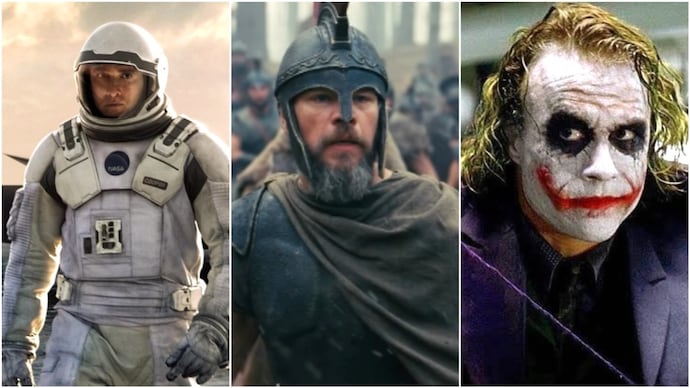
If you’ve somehow dodged the Christopher Nolan conversation until now, this week feels like the universe is gently (or not so gently) shoving you towards the cinema. His latest, The Odyssey lands worldwide on July 18, and in India on July 17, with the sort of fanfare usually reserved for royal weddings or major sporting finals.
A stunning star cast – Matt Damon as Odysseus, Anne Hathaway as Penelope, Tom Holland as Telemachus, Robert Pattinson as Antinous and Zendaya as Athena – and shot entirely on IMAX cameras – it’s the kind of epic event that makes even casual viewers wonder what all the fuss is about.
And now, the team's India visit has only added to that. Nolan, Damon, Tom Holland and Emma Thomas arrived in the country for a special premiere of the upcoming film, and fans lost it.
So, for the Nolan novice, here’s a friendly, spoiler-free ramble through the man’s world. Think of it as your pre-flight briefing before stepping into whatever mind-bending journey he’s cooked up next.
What makes Nolan’s films stand out, and why do they generate such feverish loyalty?
- It is that they marry blockbuster spectacle with stories that actually make you think. He loves playing with time and nonlinear narratives, dropping viewers into a puzzle that slowly comes together.
- Instead of relying heavily on CGI, Nolan prefers practical effects, real stunts, and real locations, making even the most unbelievable moments feel grounded.
- His films often explore themes like time, memory, identity, guilt and resilience through deeply flawed yet fascinating characters.
- Add Hans Zimmer's thunderous scores, stunning visuals, and Nolan's obsession with shooting on film and IMAX, and every film feels like an event.
- Most importantly, he never underestimates his audience. He expects you to keep up, and that's exactly why his films stay.
A guide to Nolan's films (order of watching)
Now, how should you watch them? Commit to the theatre if you can – the sound, the scale, the shared hush in the dark. Pay attention without overthinking; the plots reward focus but don’t require a physics degree. Many reveal new layers on repeat viewings. Start with something accessible, then work through his filmography at your own pace. Avoid distractions. Let the story wash over you.
Start from scratch. Nolan, the British-American director with the calm voice and restless brain, didn’t arrive with a bang. His early days were scrappy. Following (1998) (watch the film to enter Nolan's world and understand human obsession), shot on a shoestring budget with friends, already hinted at his love for tricky timelines and shady characters.
His breakthrough, Memento (2000), perfectly showcases the style in miniature. Guy Pearce’s character, grappling with short-term memory loss, navigates a revenge tale told largely in reverse. It’s disorienting yet precise, a masterclass in how structure can mirror theme.
While watching this, look out for the clever use of tattoos and Polaroids as memory aids – small details that build into something profound about how we construct our realities.
From there, Nolan levelled up fast. Give yourself a few days, or even a couple of weeks, before diving into The Dark Knight trilogy, the superhero saga that redefined the genre and remains one of the greatest trilogies of its generation. He took Batman – that brooding comic-book hero who had become a bit of a joke in previous outings – and gave him gravity.
Batman Begins (2005) grounds Batman in a believable origin story, while The Dark Knight (2008) raises the bar for superhero films. From the opening bank heist to Heath Ledger's unforgettable Joker, every moment crackles with tension and moral complexity. Wrap it up with The Dark Knight Rises (2012), where Batman faces his toughest challenge yet in Bane, bringing Bruce Wayne's journey to a powerful and emotional close.
Together, the trilogy remains one of the finest achievements in blockbuster cinema.
Then came the originals that truly cemented Nolan's reputation.
Start with The Prestige (2006), a gripping rivalry between two magicians, played by Hugh Jackman and Christian Bale. More than a film about magic, it's about obsession, ambition and the lengths people go to for greatness. Packed with twists you'll never see coming, it's the kind of film that becomes even better on a second watch. If you enjoy stories that keep you guessing until the very end, The Prestige is absolutely worth your time.
For many, Inception (2010) is the perfect introduction to Christopher Nolan. But in this watch order, it comes a little later, once you're familiar with his style.
Starring Leonardo DiCaprio, the film takes you into layered dream worlds where nothing is quite what it seems. Beyond its jaw-dropping visuals and unforgettable action sequences, Inception is also an emotional story about grief, guilt and letting go. It's thrilling, endlessly rewatchable, and ends with one of cinema's most debated final shots.
Once you're ready, move on to Interstellar (2014), where Nolan takes his storytelling beyond Earth. Matthew McConaughey plays a pilot on a mission to save humanity, but at its heart, the film is just as much about a father trying to find his way back to his daughter. From the nerve-racking docking sequence to the giant waves on the water planet, every set piece is breathtaking, made even more unforgettable by Hans Zimmer's soaring score.
What makes Interstellar special is how it uses complex science with raw emotion. It's big, bold, and occasionally overwhelming, but underneath all the space travel lies a deeply moving story about love, loss and hope.
Some call it his most emotional film; others get lost in the science. Either way, it demands to be seen on the biggest screen possible. Nolan is famously fussy about that – film stock, IMAX, proper theatres. He wants you immersed, not distracted on your phone.
His more recent work shows range without losing that signature intensity. Dunkirk (2017) is a war film told in fragments of land, sea, and air, with minimal dialogue but maximum dread. Tenet (2020) plays with time inversion in ways that make your brain do somersaults. And Oppenheimer (2023), his piercing look at the father of the atomic bomb starring Cillian Murphy, swept awards while making quantum physics and moral torment feel urgent and cinematic. It’s three hours of intense conversation, explosions (literal and emotional), and quiet devastation.
So what is the hype really about?
Nolan films don’t just entertain; they trust you to keep up. He loves non-linear storytelling, practical effects over CGI whenever he can, and big ideas wrapped in thrilling packages. Time, memory, identity, sacrifice – these recur like favourite melodies. His characters are often brilliant but haunted, pushing limits in pursuit of truth or redemption. Visually, they’re spectacular: folding cities, flipping lorries, vast space vistas, all shot with a documentary-like realism that makes the impossible feel tangible.
He collaborates with the same trusted crew – his wife and producer Emma Thomas, brother Jonathan for scripts, actors like Michael Caine, Cillian Murphy, and others who return again and again. The result feels personal even at blockbuster scale.
And crucially, Nolan makes you feel clever. You leave the cinema not just wowed, but arguing about what it all meant. That communal buzz is rare these days.
For the absolute beginner, start with Inception or The Dark Knight. They’re accessible gateways that deliver spectacle while hinting at deeper layers.
Friendly tip: Avoid trying to binge everything at once – these films reward patience and rewatches. And please, see them in a cinema if you can. Nolan shoots for the big screen; the home viewing experience, however fancy your telly, misses something essential.
With The Odyssey, Nolan is stepping into territory he's never explored before. For the first time, he's taking on a full-fledged mythological fantasy.
While his earlier films have dealt with dreams, space, or history, they've always stayed grounded in reality. This time, he's diving headfirst into ancient Greek legends filled with monsters, gods and epic adventures. Of course, don't expect Nolan to abandon what he does best. The film is still expected to feature his trademark practical filmmaking, massive real-world sets and an all-IMAX shoot.
But if there's one thing audiences can count on, it's that beneath all the spectacle will be a deeply human story. It's a fresh challenge for Nolan, but one that still carries the storytelling style his fans have come to love.
If you’ve somehow dodged the Christopher Nolan conversation until now, this week feels like the universe is gently (or not so gently) shoving you towards the cinema. His latest, The Odyssey lands worldwide on July 18, and in India on July 17, with the sort of fanfare usually reserved for royal weddings or major sporting finals.
A stunning star cast – Matt Damon as Odysseus, Anne Hathaway as Penelope, Tom Holland as Telemachus, Robert Pattinson as Antinous and Zendaya as Athena – and shot entirely on IMAX cameras – it’s the kind of epic event that makes even casual viewers wonder what all the fuss is about.
And now, the team's India visit has only added to that. Nolan, Damon, Tom Holland and Emma Thomas arrived in the country for a special premiere of the upcoming film, and fans lost it.
So, for the Nolan novice, here’s a friendly, spoiler-free ramble through the man’s world. Think of it as your pre-flight briefing before stepping into whatever mind-bending journey he’s cooked up next.
What makes Nolan’s films stand out, and why do they generate such feverish loyalty?
- It is that they marry blockbuster spectacle with stories that actually make you think. He loves playing with time and nonlinear narratives, dropping viewers into a puzzle that slowly comes together.
- Instead of relying heavily on CGI, Nolan prefers practical effects, real stunts, and real locations, making even the most unbelievable moments feel grounded.
- His films often explore themes like time, memory, identity, guilt and resilience through deeply flawed yet fascinating characters.
- Add Hans Zimmer's thunderous scores, stunning visuals, and Nolan's obsession with shooting on film and IMAX, and every film feels like an event.
- Most importantly, he never underestimates his audience. He expects you to keep up, and that's exactly why his films stay.
A guide to Nolan's films (order of watching)
Now, how should you watch them? Commit to the theatre if you can – the sound, the scale, the shared hush in the dark. Pay attention without overthinking; the plots reward focus but don’t require a physics degree. Many reveal new layers on repeat viewings. Start with something accessible, then work through his filmography at your own pace. Avoid distractions. Let the story wash over you.
Start from scratch. Nolan, the British-American director with the calm voice and restless brain, didn’t arrive with a bang. His early days were scrappy. Following (1998) (watch the film to enter Nolan's world and understand human obsession), shot on a shoestring budget with friends, already hinted at his love for tricky timelines and shady characters.
His breakthrough, Memento (2000), perfectly showcases the style in miniature. Guy Pearce’s character, grappling with short-term memory loss, navigates a revenge tale told largely in reverse. It’s disorienting yet precise, a masterclass in how structure can mirror theme.
While watching this, look out for the clever use of tattoos and Polaroids as memory aids – small details that build into something profound about how we construct our realities.
From there, Nolan levelled up fast. Give yourself a few days, or even a couple of weeks, before diving into The Dark Knight trilogy, the superhero saga that redefined the genre and remains one of the greatest trilogies of its generation. He took Batman – that brooding comic-book hero who had become a bit of a joke in previous outings – and gave him gravity.
Batman Begins (2005) grounds Batman in a believable origin story, while The Dark Knight (2008) raises the bar for superhero films. From the opening bank heist to Heath Ledger's unforgettable Joker, every moment crackles with tension and moral complexity. Wrap it up with The Dark Knight Rises (2012), where Batman faces his toughest challenge yet in Bane, bringing Bruce Wayne's journey to a powerful and emotional close.
Together, the trilogy remains one of the finest achievements in blockbuster cinema.
Then came the originals that truly cemented Nolan's reputation.
Start with The Prestige (2006), a gripping rivalry between two magicians, played by Hugh Jackman and Christian Bale. More than a film about magic, it's about obsession, ambition and the lengths people go to for greatness. Packed with twists you'll never see coming, it's the kind of film that becomes even better on a second watch. If you enjoy stories that keep you guessing until the very end, The Prestige is absolutely worth your time.
For many, Inception (2010) is the perfect introduction to Christopher Nolan. But in this watch order, it comes a little later, once you're familiar with his style.
Starring Leonardo DiCaprio, the film takes you into layered dream worlds where nothing is quite what it seems. Beyond its jaw-dropping visuals and unforgettable action sequences, Inception is also an emotional story about grief, guilt and letting go. It's thrilling, endlessly rewatchable, and ends with one of cinema's most debated final shots.
Once you're ready, move on to Interstellar (2014), where Nolan takes his storytelling beyond Earth. Matthew McConaughey plays a pilot on a mission to save humanity, but at its heart, the film is just as much about a father trying to find his way back to his daughter. From the nerve-racking docking sequence to the giant waves on the water planet, every set piece is breathtaking, made even more unforgettable by Hans Zimmer's soaring score.
What makes Interstellar special is how it uses complex science with raw emotion. It's big, bold, and occasionally overwhelming, but underneath all the space travel lies a deeply moving story about love, loss and hope.
Some call it his most emotional film; others get lost in the science. Either way, it demands to be seen on the biggest screen possible. Nolan is famously fussy about that – film stock, IMAX, proper theatres. He wants you immersed, not distracted on your phone.
His more recent work shows range without losing that signature intensity. Dunkirk (2017) is a war film told in fragments of land, sea, and air, with minimal dialogue but maximum dread. Tenet (2020) plays with time inversion in ways that make your brain do somersaults. And Oppenheimer (2023), his piercing look at the father of the atomic bomb starring Cillian Murphy, swept awards while making quantum physics and moral torment feel urgent and cinematic. It’s three hours of intense conversation, explosions (literal and emotional), and quiet devastation.
So what is the hype really about?
Nolan films don’t just entertain; they trust you to keep up. He loves non-linear storytelling, practical effects over CGI whenever he can, and big ideas wrapped in thrilling packages. Time, memory, identity, sacrifice – these recur like favourite melodies. His characters are often brilliant but haunted, pushing limits in pursuit of truth or redemption. Visually, they’re spectacular: folding cities, flipping lorries, vast space vistas, all shot with a documentary-like realism that makes the impossible feel tangible.
He collaborates with the same trusted crew – his wife and producer Emma Thomas, brother Jonathan for scripts, actors like Michael Caine, Cillian Murphy, and others who return again and again. The result feels personal even at blockbuster scale.
And crucially, Nolan makes you feel clever. You leave the cinema not just wowed, but arguing about what it all meant. That communal buzz is rare these days.
For the absolute beginner, start with Inception or The Dark Knight. They’re accessible gateways that deliver spectacle while hinting at deeper layers.
Friendly tip: Avoid trying to binge everything at once – these films reward patience and rewatches. And please, see them in a cinema if you can. Nolan shoots for the big screen; the home viewing experience, however fancy your telly, misses something essential.
With The Odyssey, Nolan is stepping into territory he's never explored before. For the first time, he's taking on a full-fledged mythological fantasy.
While his earlier films have dealt with dreams, space, or history, they've always stayed grounded in reality. This time, he's diving headfirst into ancient Greek legends filled with monsters, gods and epic adventures. Of course, don't expect Nolan to abandon what he does best. The film is still expected to feature his trademark practical filmmaking, massive real-world sets and an all-IMAX shoot.
But if there's one thing audiences can count on, it's that beneath all the spectacle will be a deeply human story. It's a fresh challenge for Nolan, but one that still carries the storytelling style his fans have come to love.

