Houthis declare naval blockade on Saudi Arabia, cite 'eye for an eye' retaliation
The Houthis have announced an immediate naval blockade against Saudi Arabia, calling it "an eye for an eye" response to Riyadh's years-long siege of Yemen.
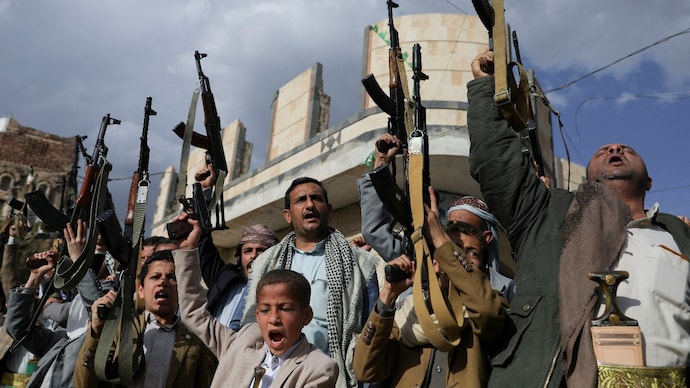
Yemen's Iran-backed Houthi movement on Monday announced an immediate naval blockade against Saudi Arabia, marking a major escalation in the long-running conflict between the two sides just days after the group resumed missile attacks on the kingdom for the first time in four years.
In a televised statement, the Houthis declared "a maritime embargo against the criminal Saudi enemy, based on the equation of 'an eye for an eye' effective immediately upon the issuance of this statement."
The group said the blockade was a direct response to what it described as Saudi Arabia's years-long restrictions on Yemen.
"The unjust and oppressive siege on our dear people for nearly 12 years, plundering our resources and imposing a comprehensive blockade on our ports and airports by land, sea, and air," the Houthis said, accusing Riyadh of continuing to isolate the country despite years of conflict.
ESCALATION AFTER SANAA AIRPORT STRIKE
The announcement comes less than a week after the Houthis fired missiles at Saudi Arabia, accusing Riyadh of carrying out airstrikes on Sanaa International Airport, which is under Houthi control. The missile attacks marked the first publicly claimed Houthi strikes against Saudi Arabia since an informal truce took effect in March 2022.
They also warned airlines against using Saudi airspace until what they called the "siege" on Sanaa airport was lifted.
Saudi Arabia said it intercepted missiles launched towards its southern region. Houthi military spokesperson Yahya Saree said the group had targeted Abha International Airport in the southern Saudi city of Abha.
The exchange ended years of relative calm along the Saudi-Yemen border and raised concerns about a renewed confrontation between Riyadh and the Iran-backed movement.
However, Yemen's internationally recognised government, which is backed by Saudi Arabia, said its own forces carried out the strike on the airport's runway to prevent an Iranian aircraft from landing. The government accused Tehran of violating Yemen's sovereignty and warned that any hostile aircraft entering the country's airspace would be dealt with "by all available means."
Officials later said the Iranian aircraft landed instead at Hodeidah airport on Yemen's Red Sea coast.
The latest escalation has heightened concerns that the conflict could spill into another front at a time when tensions across the Middle East remain high due to the US-Iran war.
Since the 2022 truce, Saudi Arabia has largely stayed out of direct confrontation with the Houthis, even as the Iran-backed group repeatedly targeted commercial shipping in the Red Sea during the Israel-Gaza war. A wider conflict could once again put key shipping lanes and regional energy infrastructure at risk, recalling earlier Houthi attacks on Saudi oil facilities.
Yemen has been engulfed in conflict for more than a decade. The civil war began after the Houthis seized the capital, Sanaa, in 2014, prompting a Saudi-led coalition to intervene the following year in support of the internationally recognised government. The fighting has since triggered one of the world's worst humanitarian crises.
Yemen's Iran-backed Houthi movement on Monday announced an immediate naval blockade against Saudi Arabia, marking a major escalation in the long-running conflict between the two sides just days after the group resumed missile attacks on the kingdom for the first time in four years.
In a televised statement, the Houthis declared "a maritime embargo against the criminal Saudi enemy, based on the equation of 'an eye for an eye' effective immediately upon the issuance of this statement."
The group said the blockade was a direct response to what it described as Saudi Arabia's years-long restrictions on Yemen.
"The unjust and oppressive siege on our dear people for nearly 12 years, plundering our resources and imposing a comprehensive blockade on our ports and airports by land, sea, and air," the Houthis said, accusing Riyadh of continuing to isolate the country despite years of conflict.
ESCALATION AFTER SANAA AIRPORT STRIKE
The announcement comes less than a week after the Houthis fired missiles at Saudi Arabia, accusing Riyadh of carrying out airstrikes on Sanaa International Airport, which is under Houthi control. The missile attacks marked the first publicly claimed Houthi strikes against Saudi Arabia since an informal truce took effect in March 2022.
They also warned airlines against using Saudi airspace until what they called the "siege" on Sanaa airport was lifted.
Saudi Arabia said it intercepted missiles launched towards its southern region. Houthi military spokesperson Yahya Saree said the group had targeted Abha International Airport in the southern Saudi city of Abha.
The exchange ended years of relative calm along the Saudi-Yemen border and raised concerns about a renewed confrontation between Riyadh and the Iran-backed movement.
However, Yemen's internationally recognised government, which is backed by Saudi Arabia, said its own forces carried out the strike on the airport's runway to prevent an Iranian aircraft from landing. The government accused Tehran of violating Yemen's sovereignty and warned that any hostile aircraft entering the country's airspace would be dealt with "by all available means."
Officials later said the Iranian aircraft landed instead at Hodeidah airport on Yemen's Red Sea coast.
The latest escalation has heightened concerns that the conflict could spill into another front at a time when tensions across the Middle East remain high due to the US-Iran war.
Since the 2022 truce, Saudi Arabia has largely stayed out of direct confrontation with the Houthis, even as the Iran-backed group repeatedly targeted commercial shipping in the Red Sea during the Israel-Gaza war. A wider conflict could once again put key shipping lanes and regional energy infrastructure at risk, recalling earlier Houthi attacks on Saudi oil facilities.
Yemen has been engulfed in conflict for more than a decade. The civil war began after the Houthis seized the capital, Sanaa, in 2014, prompting a Saudi-led coalition to intervene the following year in support of the internationally recognised government. The fighting has since triggered one of the world's worst humanitarian crises.
Yemen's Iran-backed Houthi movement on Monday announced an immediate naval blockade against Saudi Arabia, marking a major escalation in the long-running conflict between the two sides just days after the group resumed missile attacks on the kingdom for the first time in four years.
In a televised statement, the Houthis declared "a maritime embargo against the criminal Saudi enemy, based on the equation of 'an eye for an eye' effective immediately upon the issuance of this statement."
The group said the blockade was a direct response to what it described as Saudi Arabia's years-long restrictions on Yemen.
"The unjust and oppressive siege on our dear people for nearly 12 years, plundering our resources and imposing a comprehensive blockade on our ports and airports by land, sea, and air," the Houthis said, accusing Riyadh of continuing to isolate the country despite years of conflict.
ESCALATION AFTER SANAA AIRPORT STRIKE
The announcement comes less than a week after the Houthis fired missiles at Saudi Arabia, accusing Riyadh of carrying out airstrikes on Sanaa International Airport, which is under Houthi control. The missile attacks marked the first publicly claimed Houthi strikes against Saudi Arabia since an informal truce took effect in March 2022.
They also warned airlines against using Saudi airspace until what they called the "siege" on Sanaa airport was lifted.
Saudi Arabia said it intercepted missiles launched towards its southern region. Houthi military spokesperson Yahya Saree said the group had targeted Abha International Airport in the southern Saudi city of Abha.
The exchange ended years of relative calm along the Saudi-Yemen border and raised concerns about a renewed confrontation between Riyadh and the Iran-backed movement.
However, Yemen's internationally recognised government, which is backed by Saudi Arabia, said its own forces carried out the strike on the airport's runway to prevent an Iranian aircraft from landing. The government accused Tehran of violating Yemen's sovereignty and warned that any hostile aircraft entering the country's airspace would be dealt with "by all available means."
Officials later said the Iranian aircraft landed instead at Hodeidah airport on Yemen's Red Sea coast.
The latest escalation has heightened concerns that the conflict could spill into another front at a time when tensions across the Middle East remain high due to the US-Iran war.
Since the 2022 truce, Saudi Arabia has largely stayed out of direct confrontation with the Houthis, even as the Iran-backed group repeatedly targeted commercial shipping in the Red Sea during the Israel-Gaza war. A wider conflict could once again put key shipping lanes and regional energy infrastructure at risk, recalling earlier Houthi attacks on Saudi oil facilities.
Yemen has been engulfed in conflict for more than a decade. The civil war began after the Houthis seized the capital, Sanaa, in 2014, prompting a Saudi-led coalition to intervene the following year in support of the internationally recognised government. The fighting has since triggered one of the world's worst humanitarian crises.

