Landslides and toxic dust: What happens if Trump bombs Iran's Pickaxe Mountain?
Donald Trump's threat to target Iran's Pickaxe Mountain has revived scrutiny of whether bunker-buster bombs can reach the fortified site.
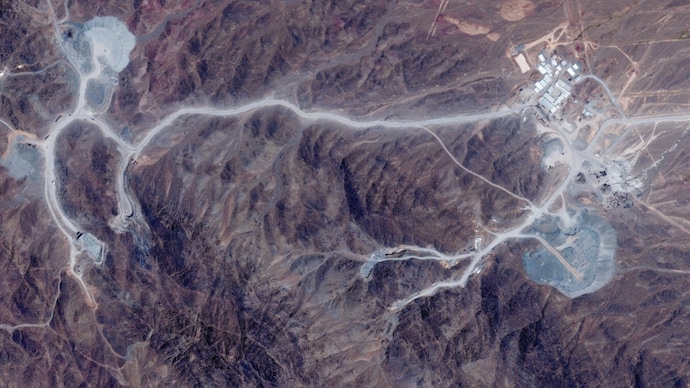
US President Donald Trump's latest threat to target Pickaxe Mountain, a heavily fortified underground site near Iran's Natanz nuclear complex, has reignited concerns over whether conventional military strikes can destroy deeply buried nuclear facilities, and what the environmental consequences could be if they do.
While military analysts continue to debate whether even America's most powerful bunker-buster bombs can penetrate the site, scientists worry that any successful strike would trigger a cascade of environmental impacts, even if it failed to destroy the underground complex.
A MOUNTAIN COULD BECOME A MASSIVE LANDSLIDE
Pickaxe Mountain, or Kuh-e Kolang Gaz La, lies within Iran's Zagros mountain range, a geologically active region made up largely of folded limestone and sedimentary rock.
A strike involving multiple deep-penetration bombs would not vaporise the mountain.
Instead, it would fracture rock layers, destabilise slopes and create extensive underground collapse zones. Seismologists say repeated impacts could generate ground shaking comparable to a small earthquake, potentially triggering rockfalls and landslides around tunnel entrances.
Although the mountain itself would survive, sections above underground chambers could cave in, permanently altering the local landscape.
TOXIC DUST COULD SPREAD FOR KILOMETRES
The immediate environmental concern would be the enormous cloud of dust produced by collapsing rock and concrete.
Fine particles of silica, pulverised cement and heavy metals released from underground infrastructure could be carried by winds across nearby communities. Inhaling crystalline silica is associated with respiratory diseases, while construction debris may contain hazardous industrial materials.
If explosions ignite underground fuel, electrical equipment or chemical stores, additional toxic gases could be released into the atmosphere.
NUCLEAR CONTAMINATION DEPENDS ON WHAT'S INSIDE
Whether radioactive contamination occurs depends entirely on what the facility actually contains.
There is no public evidence that Pickaxe Mountain houses an operational nuclear reactor. If the site contains only centrifuges used for uranium enrichment, the environmental consequences would differ sharply from a reactor accident.
Natural and enriched uranium is primarily a heavy metal rather than an intense external radiation source.
A strike that disperses uranium compounds could contaminate surrounding soil and dust, posing health risks if inhaled or ingested. Cleanup would require removing contaminated soil and restricting access to affected areas.
However, experts note that such contamination would likely remain localised, unlike disasters such as Chornobyl or Fukushima, because there is no reactor core capable of releasing massive quantities of radioactive fission products.
WATER RESOURCES COULD BE AFFECTED
The Zagros Mountains are an important watershed for central Iran. Large explosions could fracture underground rock formations, altering groundwater flow and potentially allowing contaminated dust or chemicals to seep into aquifers used by nearby communities.
Sediment from landslides could also affect seasonal streams and local ecosystems, reducing water quality for agriculture.
Even if bunker-buster bombs failed to destroy the deepest underground chambers, some experts estimate they lie 260 to 330 feet below the surface, deeper than the penetration capability of current US weapons, the environmental footprint of repeated strikes could last decades.
Scientists say damaged mountainsides, unstable rock, contaminated debris and altered groundwater systems would require years of monitoring and restoration.
Ultimately, the greatest uncertainty is not the bombs themselves, but what lies beneath Pickaxe Mountain.
US President Donald Trump's latest threat to target Pickaxe Mountain, a heavily fortified underground site near Iran's Natanz nuclear complex, has reignited concerns over whether conventional military strikes can destroy deeply buried nuclear facilities, and what the environmental consequences could be if they do.
While military analysts continue to debate whether even America's most powerful bunker-buster bombs can penetrate the site, scientists worry that any successful strike would trigger a cascade of environmental impacts, even if it failed to destroy the underground complex.
A MOUNTAIN COULD BECOME A MASSIVE LANDSLIDE
Pickaxe Mountain, or Kuh-e Kolang Gaz La, lies within Iran's Zagros mountain range, a geologically active region made up largely of folded limestone and sedimentary rock.
A strike involving multiple deep-penetration bombs would not vaporise the mountain.
Instead, it would fracture rock layers, destabilise slopes and create extensive underground collapse zones. Seismologists say repeated impacts could generate ground shaking comparable to a small earthquake, potentially triggering rockfalls and landslides around tunnel entrances.
Although the mountain itself would survive, sections above underground chambers could cave in, permanently altering the local landscape.
TOXIC DUST COULD SPREAD FOR KILOMETRES
The immediate environmental concern would be the enormous cloud of dust produced by collapsing rock and concrete.
Fine particles of silica, pulverised cement and heavy metals released from underground infrastructure could be carried by winds across nearby communities. Inhaling crystalline silica is associated with respiratory diseases, while construction debris may contain hazardous industrial materials.
If explosions ignite underground fuel, electrical equipment or chemical stores, additional toxic gases could be released into the atmosphere.
NUCLEAR CONTAMINATION DEPENDS ON WHAT'S INSIDE
Whether radioactive contamination occurs depends entirely on what the facility actually contains.
There is no public evidence that Pickaxe Mountain houses an operational nuclear reactor. If the site contains only centrifuges used for uranium enrichment, the environmental consequences would differ sharply from a reactor accident.
Natural and enriched uranium is primarily a heavy metal rather than an intense external radiation source.
A strike that disperses uranium compounds could contaminate surrounding soil and dust, posing health risks if inhaled or ingested. Cleanup would require removing contaminated soil and restricting access to affected areas.
However, experts note that such contamination would likely remain localised, unlike disasters such as Chornobyl or Fukushima, because there is no reactor core capable of releasing massive quantities of radioactive fission products.
WATER RESOURCES COULD BE AFFECTED
The Zagros Mountains are an important watershed for central Iran. Large explosions could fracture underground rock formations, altering groundwater flow and potentially allowing contaminated dust or chemicals to seep into aquifers used by nearby communities.
Sediment from landslides could also affect seasonal streams and local ecosystems, reducing water quality for agriculture.
Even if bunker-buster bombs failed to destroy the deepest underground chambers, some experts estimate they lie 260 to 330 feet below the surface, deeper than the penetration capability of current US weapons, the environmental footprint of repeated strikes could last decades.
Scientists say damaged mountainsides, unstable rock, contaminated debris and altered groundwater systems would require years of monitoring and restoration.
Ultimately, the greatest uncertainty is not the bombs themselves, but what lies beneath Pickaxe Mountain.

