Interview with Honey Trehan | 'My film has united Punjab, not incited violence'
Satluj director Honey Trehan on his battle with the CBFC, and the impact his film continues to make
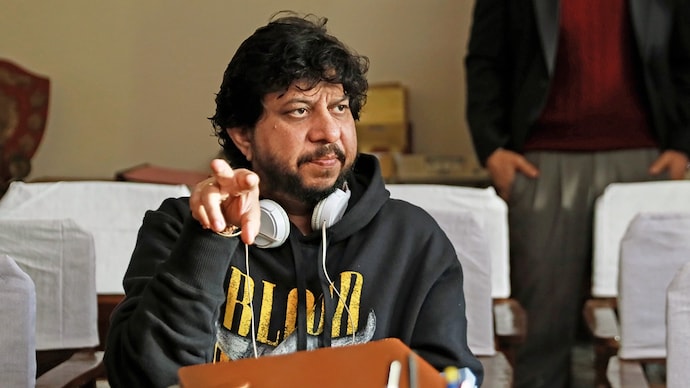
For three years, all filmmaker Honey Trehan wanted was his sophomore film, better known as Punjab ’95, to get a release. Stuck in an endless quagmire with the Central Board of Film Certification (CBFC), Trehan and his producer, Ronnie Screwvala, finally decided to forgo a theatrical release and opted for the ZEE5 streaming platform, where a censor certificate is not mandated.
For three years, all filmmaker Honey Trehan wanted was his sophomore film, better known as Punjab ’95, to get a release. Stuck in an endless quagmire with the Central Board of Film Certification (CBFC), Trehan and his producer, Ronnie Screwvala, finally decided to forgo a theatrical release and opted for the ZEE5 streaming platform, where a censor certificate is not mandated.
For three years, all filmmaker Honey Trehan wanted was his sophomore film, better known as Punjab ’95, to get a release. Stuck in an endless quagmire with the Central Board of Film Certification (CBFC), Trehan and his producer, Ronnie Screwvala, finally decided to forgo a theatrical release and opted for the ZEE5 streaming platform, where a censor certificate is not mandated.
There, too, Trehan’s dream was shortlived. Within just two days, the film was taken down in India. A few days later, the government invoked Section 69A of the Information Technology Act 2000, citing “sovereignty, integrity, defence of India” and “security of the state” to ban the film. ZEE5 blocked access to the film internationally, too.
However, in those 48 hours, Trehan’s compelling, affecting film on human rights activist Jaswant Singh Khalra’s battle for justice and the subsequent investigation of his death by the CBI had found a life of its own, with pirated copies circulating on WhatsApp and Telegram channels, torrents and YouTube. In an interview with Deputy Editor Suhani Singh, Trehan talks about his own battle with the CBFC, one where, like Khalra, he refused to relent, and the impact his film continues to make. Excerpts:
Q. What made you want to shine a light on Jaswant Singh Khalra?
I was raised in Tarn Taran and lived there until I was in sixth standard. I have seen people in our extended family and neighbourhood go through this. I had heard of Khalraji as a kid, woh impression reh jaata hai (the impression stays). You grow up, you become a filmmaker and you find certain stories, and you think, why not do something that makes sense to Punjab? It is high time the state had some serious cinema that could open a dialogue. Khalraji is one of the greatest martyrs of Punjab in recent history. In my personal opinion, his sacrifice is as big as Bhagat Singh’s. In fact, he was a great follower of his. If we have people like him, people who had such an inspiring life and journey, who lived so selflessly fighting for others, I felt his story should be known.
Q. Tell us about casting Diljit for the role.
In January 2021, I messaged Diljit Dosanjh asking, “Paaji, kahaan ho (brother, where are you)? America or India?” He said he was in India, but was leaving for America that very night. I told him to meet me in Mumbai for just half an hour. He was cutting it a bit too close to his flight, but he came. I told him I want to do a film on Punjab but set it after 1984 because people think nothing happened there after Operation Bluestar. Dosanjh said there were a few stories, but the one that should be made was on this guy called Khalra. “Paaji, kya life rahi hui hogi unki, kitni badi shahaadat hai unki (brother, what a life he had, what a huge sacrifice he made),” he said. He said he has tried to get the rights, but it never materialised. I was smiling as I looked at him. He had said what I had in mind. Diljit refused to quote a fee for the role. He felt it would be a shame if he asked for money to play such a monumental figure. Regardless, my producer paid him.
Q. Why change the name from Punjab ’95 to Satluj?
The working title was Gallughara. Punjab ’95 was the title with which we submitted the film to Toronto International Film Festival, where the film was supposed to have its world premiere in 2023. When the film was about to release on ZEE5, I got a call from a producer, saying they want to change the title. I said we can go with Satluj as that title is also registered with us. I always felt the river has a deep resonance with the entire film. That is where the bodies were thrown, including Khalra’s. It would be poetic justice. We offered the fresh title to ZEE5 and they decided to go with it.
Q. The film’s getting adulation but also plenty of criticism. Detractors say it depicts only one side of the story about the Punjab insurgency. Your comment.
I am a filmmaker, not a criminal or a politician. I made a film about a character I believe in. For three years, when we didn’t get the censor certificate, we were told it would create a law-and-order situation in Punjab. Now that the film has come out, what it has done is to bring the entire state—regardless of religion, caste and status—together. The ones who are inciting violence are the ones who have a problem with people uniting, saying, “Punjab ke Hinduon, tum kab jaagoge (Hindus of Punjab, when will you wake up)?” The statement is in public. People can decide who is on the wrong side of history. If they feel Satluj is a one-sided story, they are absolutely free to make a film from the other side. It is a free country and there’s free speech.
Q. Do you know why ZEE5 withdrew the film? Was there pressure from the government?
ZEE5 was asked to remove the film. They received a letter from the Information & Broadcasting ministry. Then, the government formed a committee. Two days later, they wrote to the platform, saying the ban continues.
Q. You have talked about how the CBFC asked for 127 cuts. How did you realise they wanted to stall the film’s release?
We wanted to submit the film to international film festivals, so we decided to get an early censor certificate and sent it to the CBFC in early 2023. They came back, asking for 21 cuts, which didn’t make any sense to us, hence we decided to approach the Bombay High Court. While proceedings were going on, we got to know the film was selected for Toronto. Later, my producer Ronnie got a call, asking him to withdraw the matter from the high court as well as from TIFF, and to do an out-of-court settlement.
Unfortunately, the out-of-court settlement went on for two and a half years and led from 21 cuts to 127 cuts. It made us eventually realise that this is a futile exercise and that they are just buying time and stalling the release.

