Watch: Skyroot's Vikram-1 flies above Earth, deploys satellite in space
Years of development have culminated in a landmark achievement for India's private space sector. The mission has crossed a major milestone, opening the door to an entirely new chapter in the country's space ambitions.
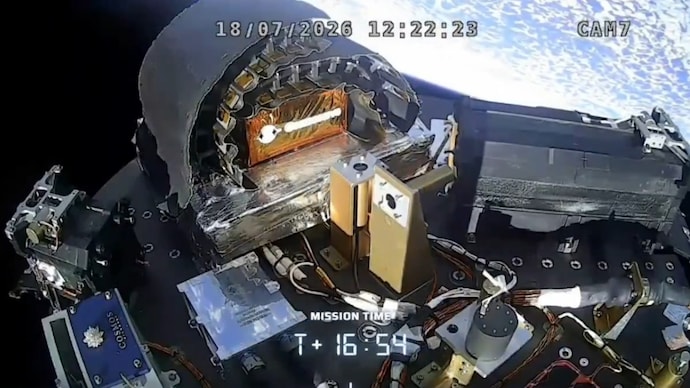
Skyroot Aerospace has made history. Its Vikram-1 rocket successfully reached Earth orbit on the first attempt during Mission Aagaman.
The rocket sent back clear, live views from space, marking a proud milestone for India’s growing private space industry.
FLAWLESS FIRST FLIGHT
The four-stage Vikram-1 lifted off smoothly from the Satish Dhawan Space Centre in Sriharikota.
Within minutes, it achieved the planned orbit and began delivering stunning images and data back to Earth. Engineers confirmed that all systems worked perfectly.
This was no small feat. Vikram-1 can carry satellites weighing up to 480 kg into low Earth orbit. Built entirely with Indian technology and talent, it proves that private companies can now handle complex space missions that once belonged only to big government agencies.
HISTORICAL FEAT FOR INDIA
With this success, India became the third country in the world to have a private company capable of orbital rocket launches.
Skyroot Aerospace, started in 2018 by former Isro scientists, has moved quickly from small test flights to full orbital capability.
The launch will make sending satellites cheaper and faster for both Indian and international customers. It creates new jobs, boosts local manufacturing, and reduces reliance on foreign rockets.
Prime Minister Narendra Modi also congratulated the young team, calling it the “arrival” of India’s private space power.
Skyroot now plans more launches in the coming months.
This successful first flight serves as an inspiration to students and young engineers across the country and shows that India’s space dreams are expanding beyond government programmes into private hands.
The future of Indian space travel has just entered a new phase, and it's set to be a promising one.
Skyroot Aerospace has made history. Its Vikram-1 rocket successfully reached Earth orbit on the first attempt during Mission Aagaman.
The rocket sent back clear, live views from space, marking a proud milestone for India’s growing private space industry.
FLAWLESS FIRST FLIGHT
The four-stage Vikram-1 lifted off smoothly from the Satish Dhawan Space Centre in Sriharikota.
Within minutes, it achieved the planned orbit and began delivering stunning images and data back to Earth. Engineers confirmed that all systems worked perfectly.
This was no small feat. Vikram-1 can carry satellites weighing up to 480 kg into low Earth orbit. Built entirely with Indian technology and talent, it proves that private companies can now handle complex space missions that once belonged only to big government agencies.
HISTORICAL FEAT FOR INDIA
With this success, India became the third country in the world to have a private company capable of orbital rocket launches.
Skyroot Aerospace, started in 2018 by former Isro scientists, has moved quickly from small test flights to full orbital capability.
The launch will make sending satellites cheaper and faster for both Indian and international customers. It creates new jobs, boosts local manufacturing, and reduces reliance on foreign rockets.
Prime Minister Narendra Modi also congratulated the young team, calling it the “arrival” of India’s private space power.
Skyroot now plans more launches in the coming months.
This successful first flight serves as an inspiration to students and young engineers across the country and shows that India’s space dreams are expanding beyond government programmes into private hands.
The future of Indian space travel has just entered a new phase, and it's set to be a promising one.
Skyroot Aerospace has made history. Its Vikram-1 rocket successfully reached Earth orbit on the first attempt during Mission Aagaman.
The rocket sent back clear, live views from space, marking a proud milestone for India’s growing private space industry.
FLAWLESS FIRST FLIGHT
The four-stage Vikram-1 lifted off smoothly from the Satish Dhawan Space Centre in Sriharikota.
Within minutes, it achieved the planned orbit and began delivering stunning images and data back to Earth. Engineers confirmed that all systems worked perfectly.
This was no small feat. Vikram-1 can carry satellites weighing up to 480 kg into low Earth orbit. Built entirely with Indian technology and talent, it proves that private companies can now handle complex space missions that once belonged only to big government agencies.
HISTORICAL FEAT FOR INDIA
With this success, India became the third country in the world to have a private company capable of orbital rocket launches.
Skyroot Aerospace, started in 2018 by former Isro scientists, has moved quickly from small test flights to full orbital capability.
The launch will make sending satellites cheaper and faster for both Indian and international customers. It creates new jobs, boosts local manufacturing, and reduces reliance on foreign rockets.
Prime Minister Narendra Modi also congratulated the young team, calling it the “arrival” of India’s private space power.
Skyroot now plans more launches in the coming months.
This successful first flight serves as an inspiration to students and young engineers across the country and shows that India’s space dreams are expanding beyond government programmes into private hands.
The future of Indian space travel has just entered a new phase, and it's set to be a promising one.

