Political flashpoint
The film has turned Punjab's contested past into an electoral issue for the assembly polls early next year
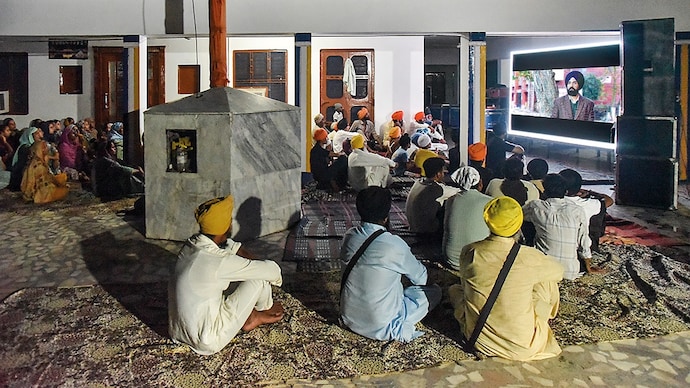
Satluj never got a proper theatrical release, yet it has become one of the most politically charged cultural events Punjab has seen in years. The Bhagwant Mann government is already locked in one of its sharpest confrontations with the Akal Takht since the Aam Aadmi Party (AAP) came to power in 2022. What began as a dispute over the state’s anti-sacrilege law has grown into a larger contest over who speaks for Punjab’s Sikhs—an elected government or the faith’s highest temporal authority. The Akal Takht has excommunicated Mann over a separate controversial video, summoned Sikh ministers and legislators to explain the government’s stand on the law, and asked the state to revisit it.
Satluj never got a proper theatrical release, yet it has become one of the most politically charged cultural events Punjab has seen in years. The Bhagwant Mann government is already locked in one of its sharpest confrontations with the Akal Takht since the Aam Aadmi Party (AAP) came to power in 2022. What began as a dispute over the state’s anti-sacrilege law has grown into a larger contest over who speaks for Punjab’s Sikhs—an elected government or the faith’s highest temporal authority. The Akal Takht has excommunicated Mann over a separate controversial video, summoned Sikh ministers and legislators to explain the government’s stand on the law, and asked the state to revisit it.
Satluj never got a proper theatrical release, yet it has become one of the most politically charged cultural events Punjab has seen in years. The Bhagwant Mann government is already locked in one of its sharpest confrontations with the Akal Takht since the Aam Aadmi Party (AAP) came to power in 2022. What began as a dispute over the state’s anti-sacrilege law has grown into a larger contest over who speaks for Punjab’s Sikhs—an elected government or the faith’s highest temporal authority. The Akal Takht has excommunicated Mann over a separate controversial video, summoned Sikh ministers and legislators to explain the government’s stand on the law, and asked the state to revisit it.
Satluj landed in the middle of that battle, with the assembly election just seven months away. On July 14, Akal Takht acting jathedar Giani Kuldeep Singh Gargaj led an ardaas (prayer) at Harike Pattan, where the Sutlej meets the Beas, for Jaswant Singh Khalra and victims of alleged fake encounters.
For AAP right now, silence seems to be the safest zone. By avoiding a firm public position on the film, Mann risks alienating neither Sikh religious opinion nor Hindu voters. But if the debate shifts towards militant violence and the victims of terrorism, the party could come under growing pressure from moderate Sikh and Hindu voters seeking a clearer statement of where the government stands.
For the Congress, already mired in factional infighting, the deeper problem is historical. The party still carries the baggage of Operation Bluestar and its aftermath, making any move into the terrain of Sikh grievance far more fraught than it is for its rivals. So, it too has opted to keep a low profile.
The challenge for the Bharatiya Janata Party (BJP) is different. Since parting ways with the Shiromani Akali Dal (SAD), it has sought to expand beyond its traditional urban base but still lacks a statewide narrative that resonates in rural Punjab. Party leaders believe the debate around the film could consolidate Hindu voters and moderate Sikhs who feel the victims of militant violence have been sidelined. Some experts, however, say those voters could just as easily gravitate towards the Congress, which has long occupied the moderate centre.
For the SAD, Satluj is both an opportunity and an awkward reminder of its own decline. Since the 2015 sacrilege controversy and the police firing under the Parkash Singh Badal government, the party has steadily lost panthic credibility, culminating in a disastrous 2024 Lok Sabha election. Backing the film could help it reconnect with parts of its traditional panthic base.
Yet both SAD and AAP leaders privately worry that younger panthic voters may gravitate towards hardliners rather than the old Akali leadership. The 2024 election offered a glimpse of that shift, with radical figures such as Amritpal Singh winning Khadoor Sahib and Sarabjeet Singh Khalsa taking Faridkot, while other hardline candidates also cut into the traditional parties’ vote base.
Whatever one makes of the film, its political impact is unmistakable. Punjab is witnessing two competing mobilisations. One seeks recognition for the victims of alleged state excesses; the other insists that the brutality of militancy cannot be pushed to the margins of public memory. Both are rooted in lived experience, and both are now competing for the same political space as the state heads to the polls.

