From the Editor-in-Chief
As the film gets widely shared and watched, the debate has moved beyond the politics of the ban itself: taboo to some and necessary revelation to others
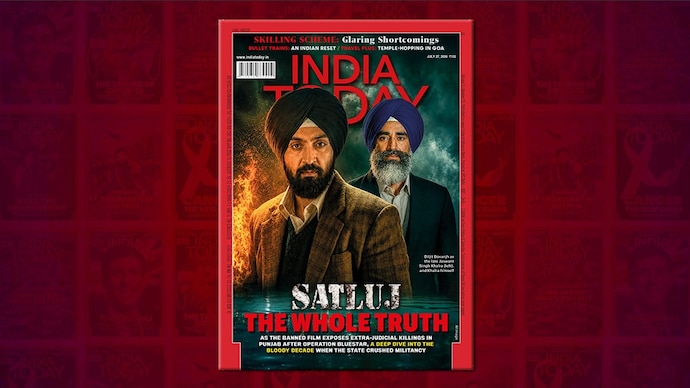
Bans have a habit of defeating themselves. Pull a film from public view and you guarantee it an audience far larger than it would have found on its own. In this case, the film Satluj was mysteriously pulled from the OTT platform ZEE5 two days after it appeared. Starring Diljit Dosanjh and directed by Honey Trehan, it depicts a particularly violent phase in Punjab. It does this by centring the figure of Jaswant Singh Khalra (played by Dosanjh), a human rights activist who was abducted and killed in 1995. The case led to the conviction of six Punjab Police officers, who were sentenced to life. Khalra’s documentation of extra-judicial killings in the early ’90s received wide play by bodies such as Amnesty International. It formed a key piece in subsequent debates on India’s response to Sikh insurgency—an attitude that oscillated between helpless passivity and spurts of overcorrection leading to excess. But as the film gets widely shared and watched, with political parties and gurdwaras organising public screenings, the debate has moved beyond the politics of the ban itself. Initially, its terms were set within how the film framed its subject: taboo to some and necessary revelation to others. One of the chief points of contention, however, became what it did not depict. That is the context in which those killings occurred. And that context is not incidental. It is essential to have an honest understanding of what Punjab went through even after Operation Bluestar.
That is what our cover story this week endeavours to present: the whole truth. Director Trehan is right to invoke his artistic freedom to focus on one aspect of reality, as he tells us. A truth shrouded in silence deserves to be told. But artistic freedom and journalistic responsibility occupy different spheres. Entire generations born after those deeply troubling years are now getting their ‘primer on Punjab’ from the film. Our cover story package completes that picture. What we are seeking to trace here is not merely history, but an update on living reality that is captured from all angles. This honours the fact that there were victims on all sides.
Our lead essay sketches out that terrifying backdrop. “Khalra’s expose of unidentified cremations in 1995 was preceded by unprecedented terrorist violence that peaked in 1991, when a mind-numbing 5,265 Punjabis—civilians, security personnel and terrorists—lost their lives,” writes lead contributor Asit Jolly, our Punjab correspondent from those years, who reported on these events as they unfolded. By the early 1990s, he adds, Tarn Taran was widely viewed as a ‘liberated’ zone and the undeclared ‘capital of Khalistan’. Everyone was targeted: Akali leaders, editors who did not toe the line, a judge in his courtroom, families of policemen, engineers working on the Sutlej-Yamuna canal, common Hindus travelling on buses and trains. The civil administration, the lower judiciary and the media collapsed before the writ of Khalistani outfits, who were virtually unchallenged in the districts bordering Pakistan, which was not a passive observer of these events but an active patron of the instability. Khalra’s reel depiction skips the fact that he supported Khalistan. The then Director General of Police, K.P.S. Gill, too is a deeply contested figure who some see as the architect of mass killings and others hail as the “supercop” who saved Punjab from the brink. Both readings contain truth. Neither is complete without the other. The film, within its creative liberties, presents one. Our cover story goes where the film chose not to.
At the heart of this package is also what Senior Deputy Editor Anilesh S. Mahajan and Group Photo Editor Bandeep Singh brought back from the ground after travelling across Punjab: a montage of human stories. Families bereaved by terrorist violence. Families bereaved by police excess. Victims from all sides. Deputy Editor Suhani Singh adds to this an exclusive interview with Trehan, who recounts the ways in which censorship worked against his attempt at truth-telling. This rounds off a package that is not a refutation of the film. It is, in a sense, the film’s necessary companion. An extension through journalism of what cinema began. Both are attempts at the truth. Neither has the whole of it. That is perhaps the most important truth this episode brings home.
The film’s suppression also raises questions that go beyond Punjab. The Modi government withheld its assent on grounds of internal security. The Congress, which was in power through the period the film depicts, has its own reasons for discomfort with an honest accounting of those years. Both postures reflect an anxiety about what full transparency on this history might disturb. That anxiety is not entirely without foundation. Radicalism in Punjab has not entirely receded. Some of the victims’ kin we spoke to have found a measure of closure. Others remain too traumatised and too afraid to speak on record. The wounds are old but not fully healed.
These years were among the darkest in independent India’s history. They produced genuine heroes and reprehensible monsters. Silence about those years may have helped a wounded Punjab move forward. But silence is not the same as healing, and what is not examined has a way of returning. Lessons lie on both sides of this story.
Tragedy, as we have learned more than once in this country, is not partisan.
Bans have a habit of defeating themselves. Pull a film from public view and you guarantee it an audience far larger than it would have found on its own. In this case, the film Satluj was mysteriously pulled from the OTT platform ZEE5 two days after it appeared. Starring Diljit Dosanjh and directed by Honey Trehan, it depicts a particularly violent phase in Punjab. It does this by centring the figure of Jaswant Singh Khalra (played by Dosanjh), a human rights activist who was abducted and killed in 1995. The case led to the conviction of six Punjab Police officers, who were sentenced to life. Khalra’s documentation of extra-judicial killings in the early ’90s received wide play by bodies such as Amnesty International. It formed a key piece in subsequent debates on India’s response to Sikh insurgency—an attitude that oscillated between helpless passivity and spurts of overcorrection leading to excess. But as the film gets widely shared and watched, with political parties and gurdwaras organising public screenings, the debate has moved beyond the politics of the ban itself. Initially, its terms were set within how the film framed its subject: taboo to some and necessary revelation to others. One of the chief points of contention, however, became what it did not depict. That is the context in which those killings occurred. And that context is not incidental. It is essential to have an honest understanding of what Punjab went through even after Operation Bluestar.
That is what our cover story this week endeavours to present: the whole truth. Director Trehan is right to invoke his artistic freedom to focus on one aspect of reality, as he tells us. A truth shrouded in silence deserves to be told. But artistic freedom and journalistic responsibility occupy different spheres. Entire generations born after those deeply troubling years are now getting their ‘primer on Punjab’ from the film. Our cover story package completes that picture. What we are seeking to trace here is not merely history, but an update on living reality that is captured from all angles. This honours the fact that there were victims on all sides.
Our lead essay sketches out that terrifying backdrop. “Khalra’s expose of unidentified cremations in 1995 was preceded by unprecedented terrorist violence that peaked in 1991, when a mind-numbing 5,265 Punjabis—civilians, security personnel and terrorists—lost their lives,” writes lead contributor Asit Jolly, our Punjab correspondent from those years, who reported on these events as they unfolded. By the early 1990s, he adds, Tarn Taran was widely viewed as a ‘liberated’ zone and the undeclared ‘capital of Khalistan’. Everyone was targeted: Akali leaders, editors who did not toe the line, a judge in his courtroom, families of policemen, engineers working on the Sutlej-Yamuna canal, common Hindus travelling on buses and trains. The civil administration, the lower judiciary and the media collapsed before the writ of Khalistani outfits, who were virtually unchallenged in the districts bordering Pakistan, which was not a passive observer of these events but an active patron of the instability. Khalra’s reel depiction skips the fact that he supported Khalistan. The then Director General of Police, K.P.S. Gill, too is a deeply contested figure who some see as the architect of mass killings and others hail as the “supercop” who saved Punjab from the brink. Both readings contain truth. Neither is complete without the other. The film, within its creative liberties, presents one. Our cover story goes where the film chose not to.
At the heart of this package is also what Senior Deputy Editor Anilesh S. Mahajan and Group Photo Editor Bandeep Singh brought back from the ground after travelling across Punjab: a montage of human stories. Families bereaved by terrorist violence. Families bereaved by police excess. Victims from all sides. Deputy Editor Suhani Singh adds to this an exclusive interview with Trehan, who recounts the ways in which censorship worked against his attempt at truth-telling. This rounds off a package that is not a refutation of the film. It is, in a sense, the film’s necessary companion. An extension through journalism of what cinema began. Both are attempts at the truth. Neither has the whole of it. That is perhaps the most important truth this episode brings home.
The film’s suppression also raises questions that go beyond Punjab. The Modi government withheld its assent on grounds of internal security. The Congress, which was in power through the period the film depicts, has its own reasons for discomfort with an honest accounting of those years. Both postures reflect an anxiety about what full transparency on this history might disturb. That anxiety is not entirely without foundation. Radicalism in Punjab has not entirely receded. Some of the victims’ kin we spoke to have found a measure of closure. Others remain too traumatised and too afraid to speak on record. The wounds are old but not fully healed.
These years were among the darkest in independent India’s history. They produced genuine heroes and reprehensible monsters. Silence about those years may have helped a wounded Punjab move forward. But silence is not the same as healing, and what is not examined has a way of returning. Lessons lie on both sides of this story.
Tragedy, as we have learned more than once in this country, is not partisan.
Bans have a habit of defeating themselves. Pull a film from public view and you guarantee it an audience far larger than it would have found on its own. In this case, the film Satluj was mysteriously pulled from the OTT platform ZEE5 two days after it appeared. Starring Diljit Dosanjh and directed by Honey Trehan, it depicts a particularly violent phase in Punjab. It does this by centring the figure of Jaswant Singh Khalra (played by Dosanjh), a human rights activist who was abducted and killed in 1995. The case led to the conviction of six Punjab Police officers, who were sentenced to life. Khalra’s documentation of extra-judicial killings in the early ’90s received wide play by bodies such as Amnesty International. It formed a key piece in subsequent debates on India’s response to Sikh insurgency—an attitude that oscillated between helpless passivity and spurts of overcorrection leading to excess. But as the film gets widely shared and watched, with political parties and gurdwaras organising public screenings, the debate has moved beyond the politics of the ban itself. Initially, its terms were set within how the film framed its subject: taboo to some and necessary revelation to others. One of the chief points of contention, however, became what it did not depict. That is the context in which those killings occurred. And that context is not incidental. It is essential to have an honest understanding of what Punjab went through even after Operation Bluestar.
That is what our cover story this week endeavours to present: the whole truth. Director Trehan is right to invoke his artistic freedom to focus on one aspect of reality, as he tells us. A truth shrouded in silence deserves to be told. But artistic freedom and journalistic responsibility occupy different spheres. Entire generations born after those deeply troubling years are now getting their ‘primer on Punjab’ from the film. Our cover story package completes that picture. What we are seeking to trace here is not merely history, but an update on living reality that is captured from all angles. This honours the fact that there were victims on all sides.
Our lead essay sketches out that terrifying backdrop. “Khalra’s expose of unidentified cremations in 1995 was preceded by unprecedented terrorist violence that peaked in 1991, when a mind-numbing 5,265 Punjabis—civilians, security personnel and terrorists—lost their lives,” writes lead contributor Asit Jolly, our Punjab correspondent from those years, who reported on these events as they unfolded. By the early 1990s, he adds, Tarn Taran was widely viewed as a ‘liberated’ zone and the undeclared ‘capital of Khalistan’. Everyone was targeted: Akali leaders, editors who did not toe the line, a judge in his courtroom, families of policemen, engineers working on the Sutlej-Yamuna canal, common Hindus travelling on buses and trains. The civil administration, the lower judiciary and the media collapsed before the writ of Khalistani outfits, who were virtually unchallenged in the districts bordering Pakistan, which was not a passive observer of these events but an active patron of the instability. Khalra’s reel depiction skips the fact that he supported Khalistan. The then Director General of Police, K.P.S. Gill, too is a deeply contested figure who some see as the architect of mass killings and others hail as the “supercop” who saved Punjab from the brink. Both readings contain truth. Neither is complete without the other. The film, within its creative liberties, presents one. Our cover story goes where the film chose not to.
At the heart of this package is also what Senior Deputy Editor Anilesh S. Mahajan and Group Photo Editor Bandeep Singh brought back from the ground after travelling across Punjab: a montage of human stories. Families bereaved by terrorist violence. Families bereaved by police excess. Victims from all sides. Deputy Editor Suhani Singh adds to this an exclusive interview with Trehan, who recounts the ways in which censorship worked against his attempt at truth-telling. This rounds off a package that is not a refutation of the film. It is, in a sense, the film’s necessary companion. An extension through journalism of what cinema began. Both are attempts at the truth. Neither has the whole of it. That is perhaps the most important truth this episode brings home.
The film’s suppression also raises questions that go beyond Punjab. The Modi government withheld its assent on grounds of internal security. The Congress, which was in power through the period the film depicts, has its own reasons for discomfort with an honest accounting of those years. Both postures reflect an anxiety about what full transparency on this history might disturb. That anxiety is not entirely without foundation. Radicalism in Punjab has not entirely receded. Some of the victims’ kin we spoke to have found a measure of closure. Others remain too traumatised and too afraid to speak on record. The wounds are old but not fully healed.
These years were among the darkest in independent India’s history. They produced genuine heroes and reprehensible monsters. Silence about those years may have helped a wounded Punjab move forward. But silence is not the same as healing, and what is not examined has a way of returning. Lessons lie on both sides of this story.
Tragedy, as we have learned more than once in this country, is not partisan.

